-
12Months12Places, #11 Colorado
Well, Gus has cast his vote. Without any equivocation.
We’re in the last month of our trip (in Illinois now), so it’s natural that people are asking, “what place did you like best?” How do we answer that? We’ve been to so many great places. Plus, it depends on if you’re talking about which house, which town, which adventure…
But Gus is very clear about it; he would vote for the house in Dolores, CO. Nothing to do with “his” room or the yard. The Dolores house, a small bungalow on a street of small bungalows, was built in 1908. It was very nicely rehabbed not too long ago, but still, it is an old house. And like a lot of old houses, it has ever-so-small chinks that mice can get in. And they did. So Gus felt like he had a purpose in life again.
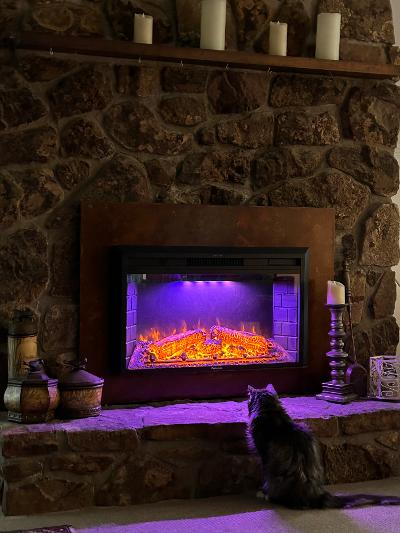
Gus waiting at the fireplace, near where the first mouse sighting occurred.
We might not have even known we had a mouse (yeah, I know, it’s never a mouse, it’s mice!) if Gus hadn’t started chasing one around the living room. We called the owners, they sent over the pest control guy, he caulked around the fireplace and put out a trap. Fortunately for Gus that wasn’t the end of it; we still would see a mouse every few days.
Yes, we did think about moving. We looked at what else might be available but decided to stay. With Gus on patrol we felt pretty safe.
Plus, I loved Dolores (despite the mice). What’s not to like about a town where you can walk a trail along the river to get to a library (4 blocks north), to the cutest grocery store (3 blocks south), to the brewery (3 blocks south, one block west), coffee shop (2 blocks north) and 6 blocks north to the Mexican restaurant with its outdoor patio right on the river. Along the river trail a little further south was a ball field where we watched some teenage teams play and then further along was a trail up the cliff that runs along the west side of town. Hearing sirens and whistles going on at length one evening, we stepped outside to see a parade going down the main street. Following one police car and two fire engines were about 30 pickup trucks and jeeps. In the back of each vehicle was one high school senior with balloons, colorful banners and big grins. It was graduation night in Dolores.
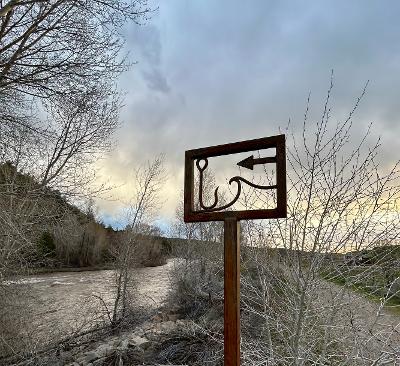
Another reason to love Dolores: they post signs where you can access the river to fish – instead of any “no fishing” signs.
Dolores (named for the river, Spanish for sorrows), has a population of just under 1000. When the railroad established a rail line and station in the largely uninhabited area (in 1891), the residents of a nearby settlement, called Big Bend, moved everything to the new town. Many years later Big Bend was completely submerged under the reservoir that formed from the McPhee Dam.
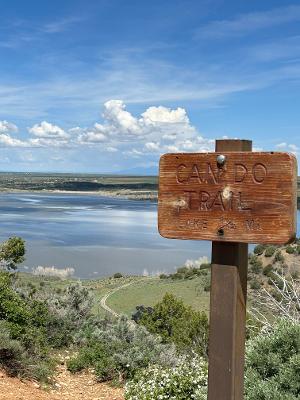
At the top of McPhee Recreational area. The start of the Can Do trail (we did!), overlooking the reservoir, with views of the Abajo mountains to the northwest, the La Plata mountains to southeast, Mesa Verde and the Mountain of Sleeping Ute to the southwest.
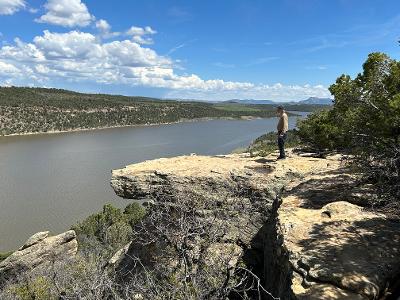
View along the Can Do trail, overlooking the Dolores River where it flows into the McPhee Reservoir.
Also submerged when the reservoir was filled were many abandoned native American sites. Fortunately there are many other sites that were preserved. The pueblos in southwestern CO area were thought to have generally been inhabited until about 1300 A.D. Historians are still not sure why they were abandoned but the people are thought to be the ancestors of the present-day Arizona Hopi and New Mexico Pueblo Indians. There are the national parks, like Mesa Verde, with amazing remnants of large pueblo settlements. But many more exist. We hiked many trails where you’d come across smaller pueblos that had been discovered and left somewhat undisturbed.
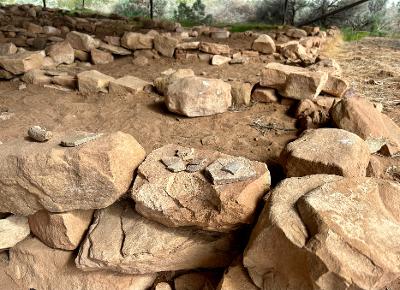
Remains of a pueblo at the Hawkins Preserve in Cortez. There was a canopy over it, with excavated pottery shards here and there. An archeologist John and I met at the cultural center has done some studies here. School kids are brought here for an outing. Amazing that anything remains.
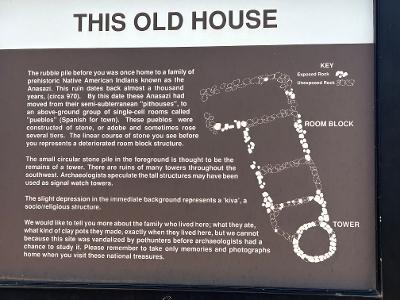
A sign at the pueblo-ruins on the Can Do trail. Without the sign we would have walked right by them, assuming the rocks were just random formations – if we had noticed then at all.
A big part of what made our Dolores stay so wonderful was that we were only 20 minutes away from where my sister Kathy lives. It was Kathy who led us to some of the trails with the pueblos, one at nearby Hawkins Preserve and then one that we came upon on a beautiful hike through Sand Canyon, among wildflowers blooming everywhere. It’d take a book to write all the adventures we had with Kathy. She and I did a natural dyeing class, a mosaics class, we soaked in natural hot springs, tasted wines at a vineyard, groomed her horses, explored a few towns and walked many trails. The three of us had some great meals and wide-ranging discussions.
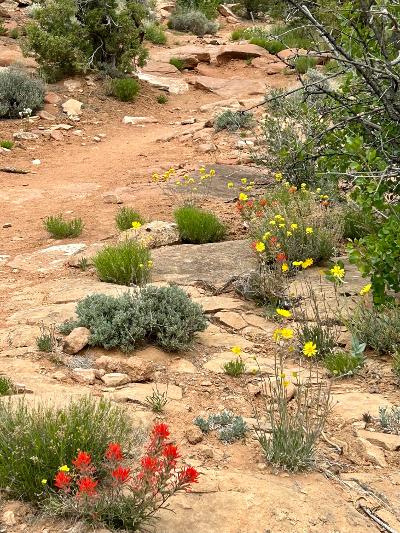
So many wildflowers were in bloom on the trail in Sand Canyon. Had good intentions to look each of the plants up. But just appreciating the beauty is good too.
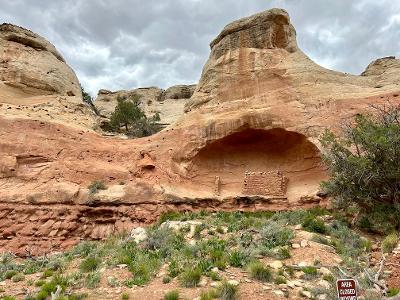
One of the pueblos on the Sand Canyon trail. There are ruins all over the place in the wilds, some marked, some not. These were quite accessible. A guy on the trail was saying how as a boy they’d climb right up into the ruins, before they were marked with signs to keep out. It was the discovery and study of nearby Mesa Verde (now a National Park) that led to the realization of the importance of these sites.
We made one other short stop in Colorado, up north near Keenesburg. John got to visit with his college buddies, Joe and Al. And we got a tour of the Wild Animal Sanctuary where Joe volunteers. The sanctuary is dedicated to rescuing endangered large cats (tigers, lions, leopards, jaguars, etc), bears, wolves, foxes, and other large carnivores. It also has a few camels, emus, ostriches, and wild horses. The animals are provided with enriching natural habitats for life. The illicit trade in exotic animals is the third largest illegal profit-making trade worldwide, after drugs and weapons.
The organization has three locations but only the one we visited is open to the public. In order to minimize the stress on the animals, visitors are restricted to a three-mile-long aerial walkway about 30 feet above the ground. Apparently the animals do not consider anything in the air above them to be encroaching on their territory whereas someone walking outside their fenced area is seen as threatening (or as lunch!). This walkway gave us some great views of the animals, as well as some great views of the surrounding lightning storm! Joe assured us that the geography of the area is such that we were perfectly safe from lightning on this metal bridge up in the sky. Uh-huh! A strong, driving rain did finally cause us to turn around just short of the camels at the end of the walk. But meanwhile we had watched bears playing in the lake, listened to the wolves howling, learned the history of individual big cats, found a western kingbird nest with four eggs, and enjoyed Joe’s knowledge of, and passion for, the sanctuary and its mission.
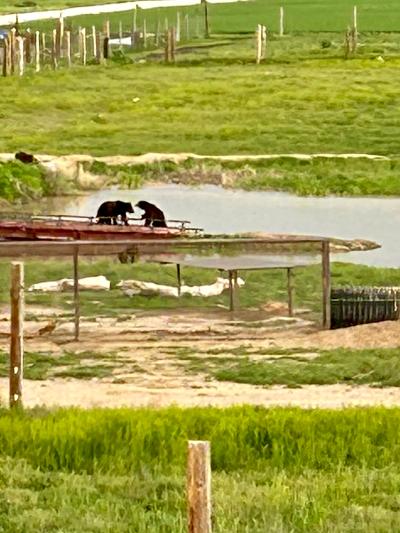
The bears were very active, lots of play in the water. Always better to visit on a cooler, windy day.
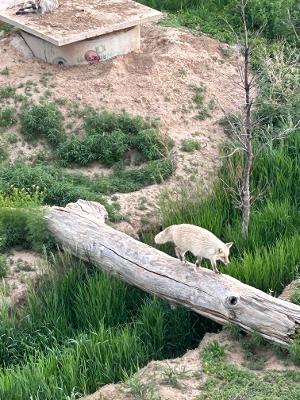
A beautiful blond fox, totally impervious to us gawking at her from the walkway above.
Now that we’re here in Illinois Gus has a pretty nice setup, a big sunroom with lots of windows looking onto the woods and bird feeders. Even a raccoon who comes by nightly to raid the bird food. But he’s still voting for Dolores, Colorado as his favorite place. Maybe John and I will have our favorites narrowed down by the time we leave here, and I write our last blog; we’ll see. But I doubt it!
Some other random photos:
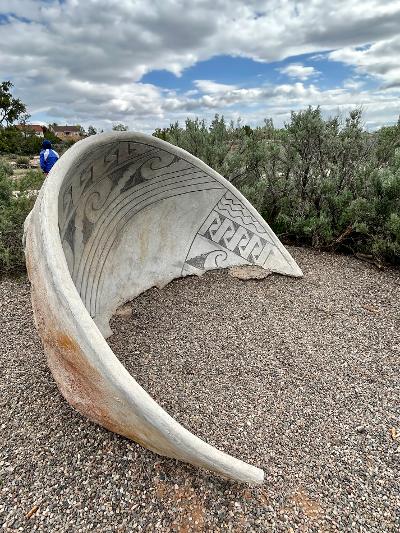
Art installation at Hawkins Preserve, about 5 feet tall, 6 feet wide. Appropriate subject given the pueblo ruins at the preserve.
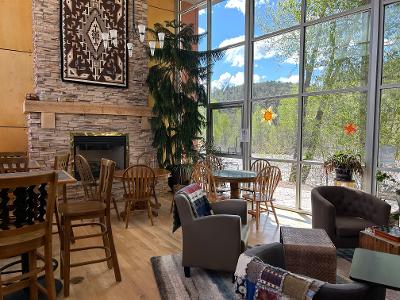
How can such a small town have such a wonderful library? I frequently give thanks for libraries. This is the library’s reading room overlooking the Dolores River.
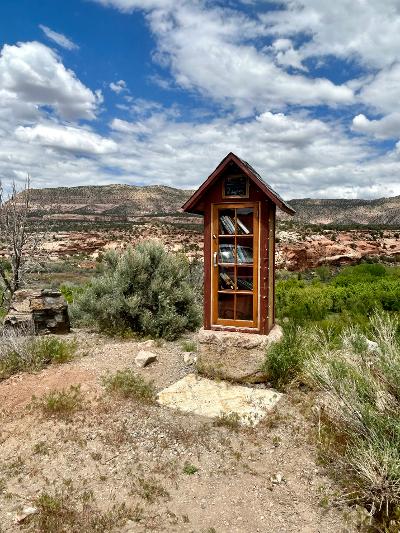
And then the other libraries we love to find – the Little Free Libraries. This one was in one of the more unlikely, but beautiful, spots, an out of the way pull out overlooking part of Sand Canyon.
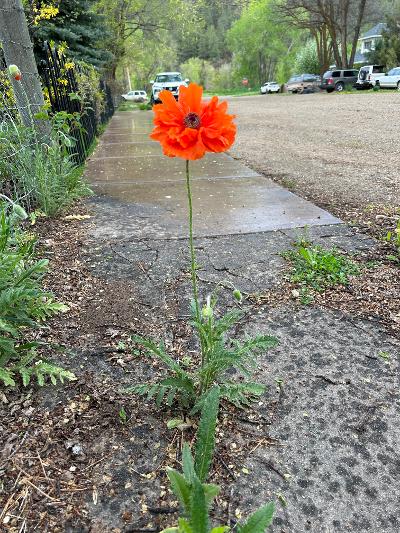
The poppy that got away. A “volunteer” in the sidewalk outside our house. The back yard was full of them but most hadn’t bloomed yet by the time we left.
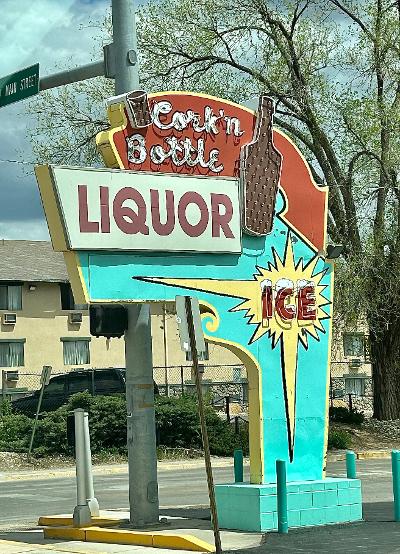
My favorite sign in Cortez. The store it fronted looked just as retro, except for the ads for vapes. Not totally in character.
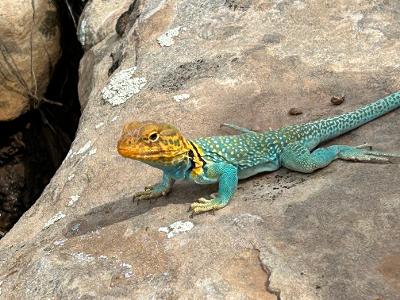
This guy is fast! It’s a common collared lizard. They can run on just their hind legs supposedly. When he did run he was too fast for us to tell how many legs he was using. Looks like he’s wearing pajamas 🙂
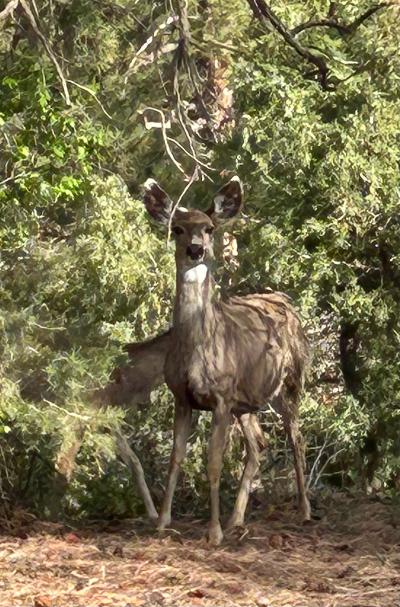
Saw lots of deer every drive to Kathy’s house. Beautiful – as long as you see them in time. They’re rather careless about crossing the road.
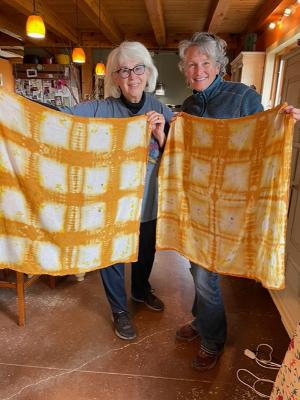
Kathy and I didn’t intend to make our dye projects look so identical. Guess we think alike! Such an interesting day learning about the plants and the process for making the dyes and then the various ways to use them.
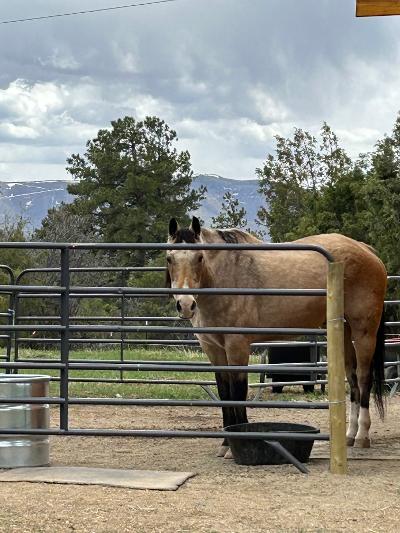
Kathy’s horse Moon. Of her three horses, he is the one that you could groom all day and he’d still have loose hair left. But he was also the one most patient with a novice groomer.
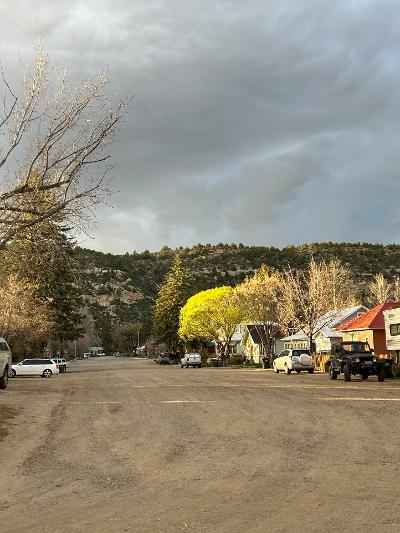
Dolores at dusk.
-
12Months12Places, #10 Santa Fe
“The City Different” – that’s how Santa Fe describes itself.
And there is much that is different about Santa Fe. But wherever we’ve been on this journey a few things stay the same: we try to stay in a house near a walking trail so we can easily do a daily walk no matter what else we do that day, and I scope out the libraries and spend time there reading magazines, finding events on the notice boards, and getting a feel for the community.
The Southside branch of the Santa Fe Library provided both the routine and the something different. In addition to the magazines and comfortable reading area, the kids’ art on display, and the events board, this branch had two things I’d not seen before. One was the “seed library”, shelves with seed packets set out so that people could take some to plant and leave extra seeds of their own. And the other was the short story kiosk. You select your reading time, the choices were 1 minute, 3 minutes or 5 minutes, and a short story of the appropriate length rolls out of the dispenser. I chose 3 minutes and got “The Bear Under the Bed”, a short story by Rolli, a well-known children’s author. It starts out, “Sometimes I can’t sleep. That’s because of the bear under the bed.”

While we didn’t have bears under the bed, we did have lizards in the yard. And on our neighborhood walks. Once again, Santa Fe did something different than we’ve seen in any place we’ve been so far. The walking trails are not just in parks, along rivers, or in other public spaces; these trails were actually in large areas deliberately left between houses as the suburbs were built. So you walk along sometimes seeing nothing but trees, rocks, hills, gullies and sky, and then sometimes passing along someone’s backyard and admiring their windchimes, adobe wall or fence.
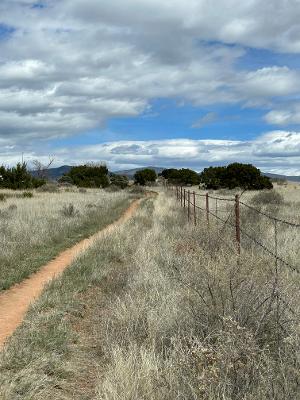
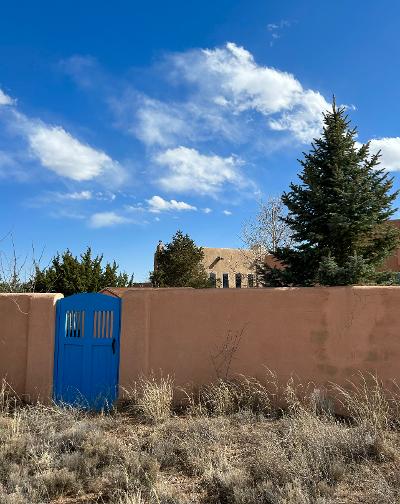
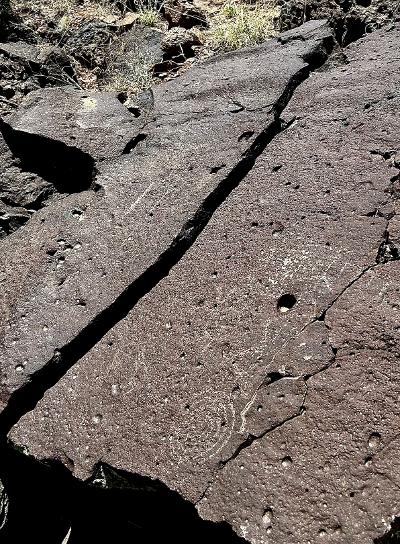
Besides walking the neighborhood, we try to find places to walk to see something different. One such place was the Cieneguilla Petroglyph Trails. The trail went along for a couple of relatively flat miles, a wide sand-bare trail with signposts every hundred yards or so pointing the very obvious way. Once the trail began to climb the mountain and became a just discernible track over rocks and tree roots, there were no more signposts. So we went the way we thought was right and did finally come across a few petroglyphs, hoping they were the real 700 year-old images and not something that present-day vandals scratched into the basalt rock with their car key. Heading back down the trail we felt good about our find until we heard the young couple who had passed us and gone beyond where we had stopped, yelling “look, a turtle!” and “wow, that one looks like an owl!” Clearly we lost the trail too soon.
But there was plenty of other art to be seen. Santa Fe is the 3rd largest art market in the United States. Canyon Road is the center of that, with over 100 galleries along a beautiful mile or so of adobe buildings with sculpture filled courtyards. My sister Kathy visited us and she and I explored these galleries, Most of that art was beyond my means but there are other more affordable venues in the city, especially the Sunday morning Artisans’ Market held in the same building as the Saturday morning Farmers’ Market in the Railyard.
The Railyard is the one area in downtown “old” Santa Fe that doesn’t reflect the city’s near universal adoption of the pueblo style of architecture. In the early 1900s a movement led by archeologists and artists aimed to revive the city’s architectural roots, drawing on the Pueblo and Territorial architectural traditions with contoured adobe walls, flat roofs, vigas or beams. These buildings give Santa Fe its iconic look.
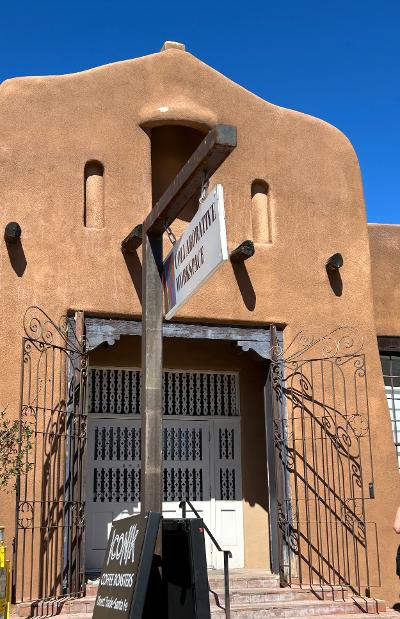
But the Railyard was deliberately rehabbed using the same materials and basic warehouse look as the original working railroad buildings had. The railroad came to Santa Fe in late 1800’s and was a center of commerce and tourism until it declined after WWII. In the late 1980s it was declared a blighted area and about 20 years later the city transformed it into a center of contemporary arts, museums, theater, restaurants, breweries, and living space. Two trains still use the tracks, a commuter train and a tourist expedition train. And one of the shops, La Lecheria, sells the tastiest New Mexico flavored craft ice creams!
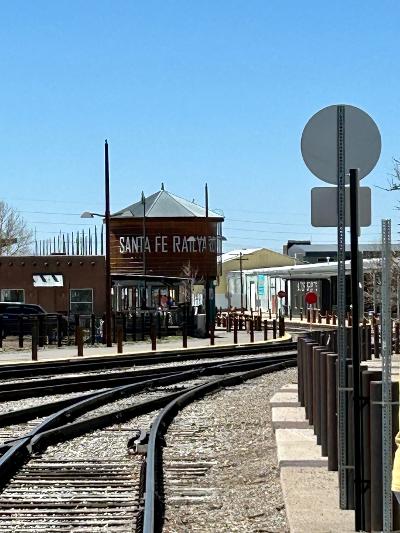
Since Santa Fe we’ve moved on to what really is a City Different for us. We’re in Dolores, CO, a town with a population of 885. And the nearest town, 20 minutes away, has just over 8,000. This is by far the most remote and smallest town we have stayed in for more than a few days. But we have a riverside walking trail a block away and a surprisingly big library 3 blocks away, so not all will be different. Will tell you all about it next post.
Some random photos:
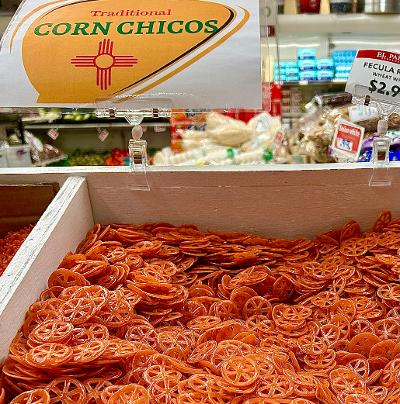
In every location I check out the ethnic markets. This was in the El Paisano Super Market. The wheels are a type of uncooked pasta.
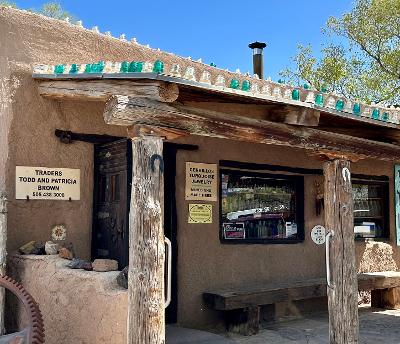
A Trading Post in the small town of Los Cerillos. It also had a petting zoo, Turquoise Mining Museum and scenic overlook of the hills that gave the town its name.
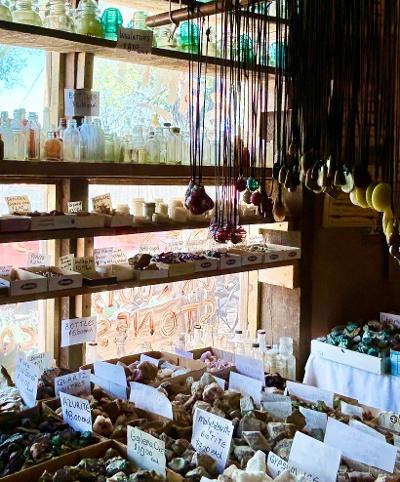
Some items inside the trading post. It also had cow skulls, a taxidermed buffalo head, pottery, etc….

Pecos National Historic Park, with ruins of the almost century old Pecos pueblo village and a 17th century mission. Here John descends into one of the kivas, a circular pit house used for religious purposes. The hole in the ground represented a connection to the Underworld, from which the Pueblo people believed they originated. Over 2000 people lived here at its largest point. The population dropped to about 300 people in the early 1800’s and they moved to consolidate with the nearby Jemez pueblo, abandoning this site.
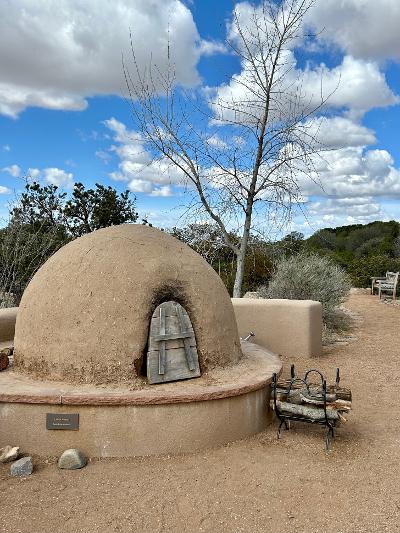
A horno oven. Wood is burnt inside it. Then the coals are raked, the bread is placed in the oven, the door sealed, and the bread cooks.
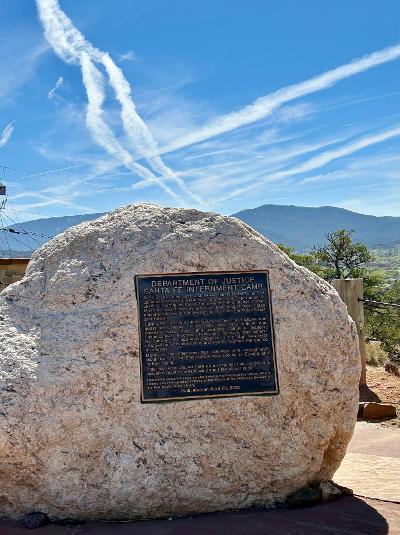
The Japanese Internment Camp Memorial. Santa Fe had one of America’s largest internment camps in the country during WWII; over 4500 Japanese men were imprisoned in it.
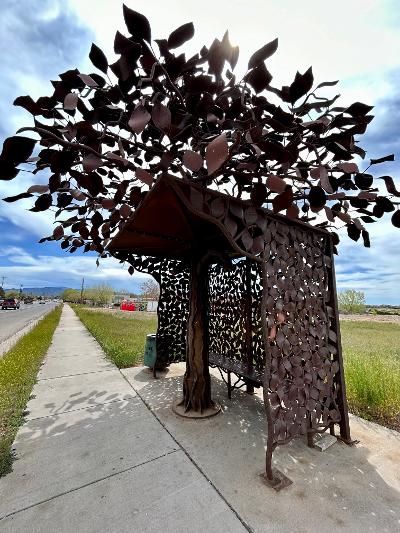
Santa Fe has some of the best bus stops I’ve seen. This one was one of my favorites.

At the Randall Davey Audubon Center. This historic building was the artist’s home and studio in the early 1900’s and was later gifted to the Audubon Society, with the surrounding 135 acres. Wild turkeys were doing their mating displays when we walked the surrounding trails.
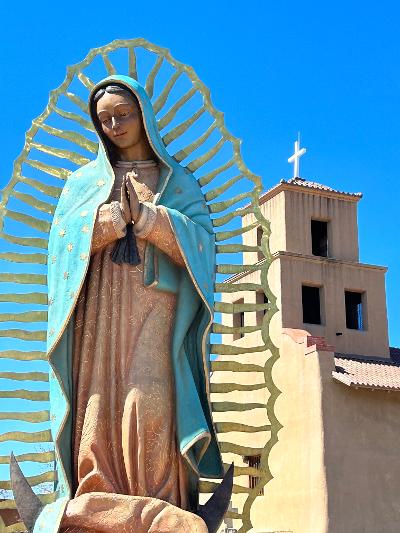
Our Lady of Guadalupe shrine in Santa Fe. In 1531 the Virgin Mary appeared to an indigenous Mexican, Juan Diego. She asked him to tell the bishop of her appearance. Juan Diego didn’t think the bishop would believe him and so didn’t. Later he was searching for a priest for his dying uncle and the Virgin Mary appeared and healed his uncle. To give Juan Diego proof of her appearance she filled his cloak with blooming roses in the middle of winter when roses don’t bloom. When Juan Diego showed the roses to the bishop an image of the Virgin Mary was imprinted on it. The bishop then believed Juan Diego, who was later made a saint. The Lady of Guadalupe is a strong symbol of faith in the Mexican Catholic Church.
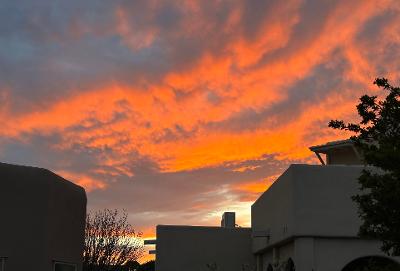
One of Santa Fe’s spectacular sunsets.
-
12Months12Places, #9 Arizona
Goodwill is my best friend. The Dollar Store is a close second.
Each place that we’ve had an extended stay (3-4 weeks) has been missing some little everyday need: colander, vegetable peeler, potholders, for example. Some we’ve been able to work around; in one place I made a square apple pie – just used a cake pan because there was no pie plate. It tasted just fine. Some missing items you just don’t want to work around; it’s easier to go buy a corkscrew (Dollar Store) than trying to open a bottle of wine without one. The house in Omaha last fall had absolutely no lamps, only ceiling lights in every room, which was not comfortable. Thank heavens for Goodwill with its variety of $3 – $5 lamps. The house’s owners are generally okay with you leaving those things behind when you move on. And if not, then back to Goodwill they go.
The Scottsdale house was no exception. Everyone who hears Scottsdale thinks, “oooh, swanky” but Scottsdale is as diverse as any city with its pockets of luxury, pockets of working-class neighborhoods, even pawn shops just two blocks south of the touristy Old Scottsdale area. Ok, yes, maybe Scottsdale is skewed a little more to the wealthy vs nonwealthy, but it still has its Dollar Stores and a few Goodwills.
The house we rented was a nice, basic house in one of the modest neighborhoods. Even there many houses have swimming pools. We didn’t, but what we did have in the back yard was a putting green. But, inexplicably, no putters! Goodwill to the rescue. Fifteen dollars later we had two putters and a three iron.
The other reason we rented this house was the canal outside our back gate. The greater Phoenix metropolitan area has over 80 miles of canal trails with lights, landscaping and public art. Some fishing is allowed. Ducks swim in the water (people don’t!). Walking just a couple of miles south on “our” canal brought us to Papago Park, the Desert Botanical Garden, and a great overlook to the zoo.

The canal trail goes through a tunnel under McDowell Road; swimmers go all the way through too.
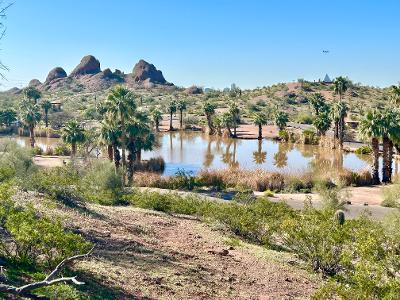
Looking south to the zoo from top of a sandstone formation in Papago Park.
Staying in Scottsdale was a combination of exploring the new and revisiting the remembered. We met there 40 years ago, both lived in the area a few years, and then after we moved to Maine I would go back to visit my parents many times over the 35 years they lived in Sun Lakes, just southeast of Phoenix. But you know the saying “you can’t go home” – well, you can go but it may not look the same at all.
A metropolitan area of 5 million people is not the type of area we would have chosen to stay were it not that we did live there once and thought it’d be fun to see it all again. I recognized names of roads: Alma School, Baseline, Buckeye, Camelback, and geographic features: Camelback Mountain, Papago Park, the Tempe Butte, but not much else! Tempe, the little college town with our favorite used bookstore, movie theater and spaghetti restaurant is now a city of high-rise dorms and major commercial buildings.
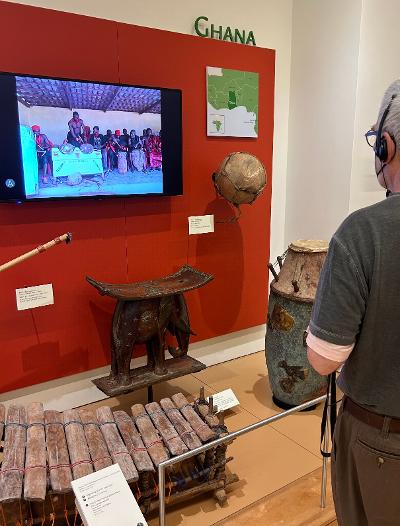
But all the changes just gave us new things to explore! One of the most unexpected was the Musical Instrument Museum in northern Phoenix. The founder of the museum was a CEO of Target Corp who recognized that most musical museums in the US focus on Western music and instruments. He had the idea to showcase instruments played every day by people worldwide. The museum currently has a collection of more than 8,000 instruments from more than 200 world countries. As you approach each country’s display the headphones you are wearing play the music while you watch the musicians play on video. The breadth of this museum was astounding. It’s impossible to pick just one favorite style of music.
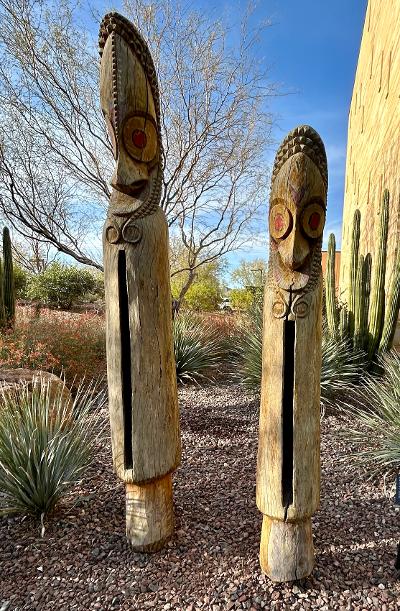
Outside the museum, drums.
Picking a favorite at The Perch Brewery, a restaurant in Chandler (another town in the greater metro area) was hard too. No, not my favorite dish, but my favorite bird. The restaurant is home to over 50 brightly colored parrots and parrot-like birds. The owners are dedicated to giving these once abandoned or abused birds a loving forever home. They don’t breed the rescue birds; they just care for them while providing a charming atmosphere for the diners who provide stimulating interactions for the birds. The restaurant has a lovely courtyard with trees, water features, windchimes and huge cages for the birds. The food is very tasty too. But for me, this was a special place to go because I’d been there often with my parents. They had been so excited to introduce me, and at different times, my siblings, to this “cool” place.
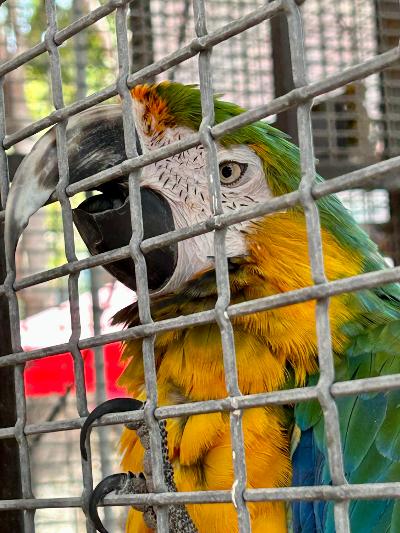
Wrigley, a Blue and Gold Macaw
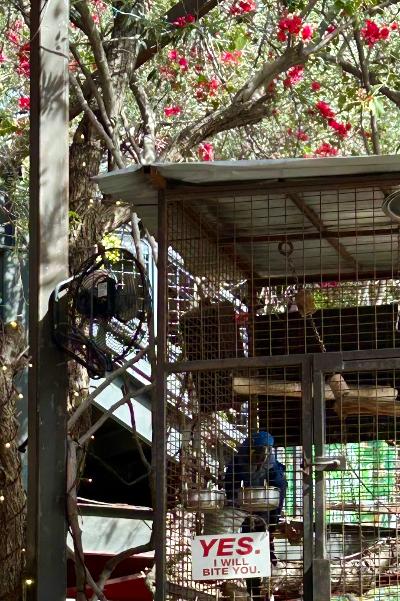
Can’t say they didn’t warn you!
Many people think that living in the desert must be boring, always the same, but the truth is much different. Seasons are definitely distinct, especially spring. There were predictions that 2023 might be a superbloom year. A superbloom occurs when an unusually high number of wildflowers blossom at roughly the same time in the spring. Factors that lead to these superbloom years are widespread rains that come early and are spaced out so there were no extended dry periods and temperatures that stay moderate with no huge swings to extremes. Unfortunately spring was coming a little late this year, as the leader of an Audubon birdwalk I went on explained, so we didn’t get to see as much blooming as I’d hoped but what we did see was beautiful, including the deep gold fields of desert poppies on our way to Saguaro Lake, as well as a few wild horses.
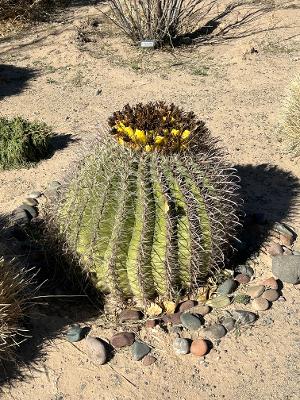
Barrel cactus in bloom
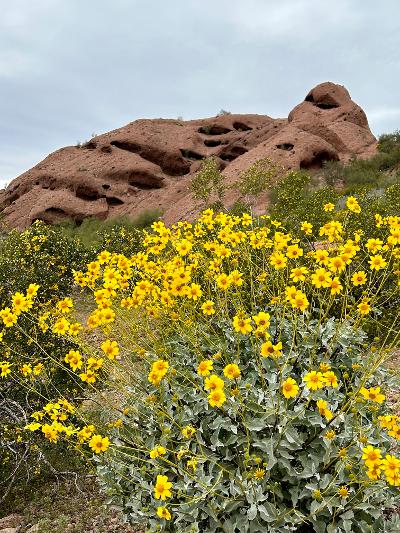
Brittlebush. It has a long history of uses by indigenous and pioneers, such as making the resin into a glue, chewing it as gum and burning it as incense. The bark was used to treat toothache.
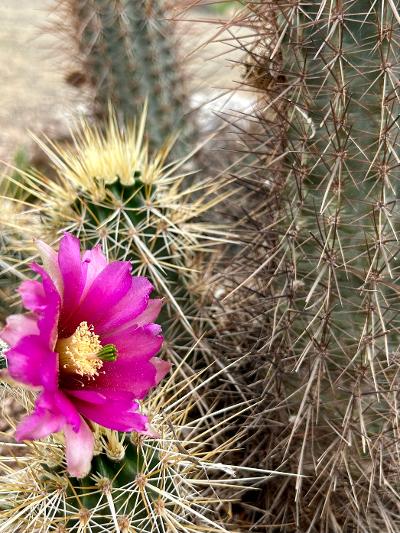
Blooming hedgehog cactus.
Despite all the amazing things we’ve seen and done, some of the most special times have been with family and friends. Our Scottsdale stay was no exception. John’s siblings and their spouses (Cheryl & Dick, Mike & Therese) came to stay with us. And while they were there our nephew Joey flew in from LA for a couple of days. It was so much fun sharing adventures with them (boat ride on Lake Saguaro, White Sox spring training game, lunch trip to Sedona, etc) as well as the quiet in-between times.
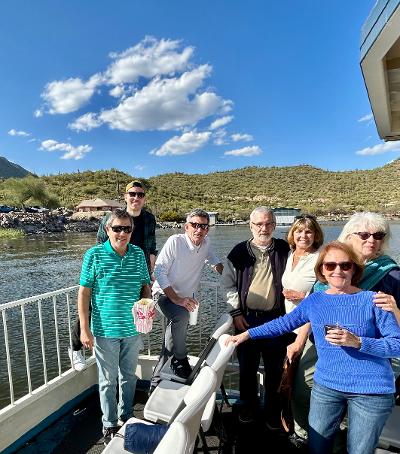
On the Desert Belle.
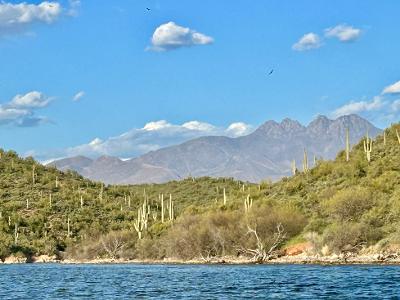
Saguaro Lake, a reservoir on the Salt River formed by the Stewart Mountain Dam.
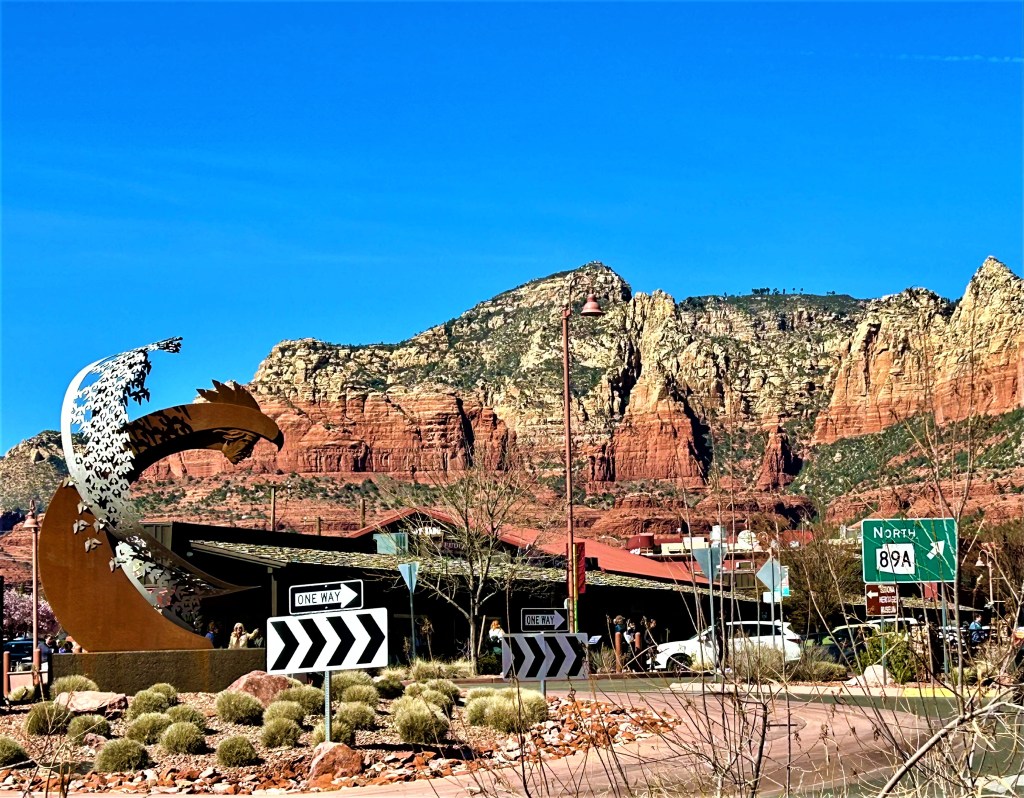
The red rocks of Sedona are formed by a unique layer of red to orange-colored sandstone deposited over 200 million years ago and found only in the Sedona vicinity. The town is popular for its spiritual sites, pink jeep tours of the desert, and shopping.

Even leaving Scottsdale to head to Santa Fe we were driving through familiar but changed territory: Sunflower, Payson, Heber, Snowflake, towns I’d visited for skiing, hiking, camping, years ago. Places as different from the metropolitan Phoenix valley as you can get. As was the area of our short stay in Ramah, NM, in a cabin seven miles down a dirt road off a highway in the middle of nothing. Fortunately this sweet place had everything we needed for two nights.

Rural living near AZ – NM border; the postman can’t get to all the scattered homes so the end of each road is its own post office.
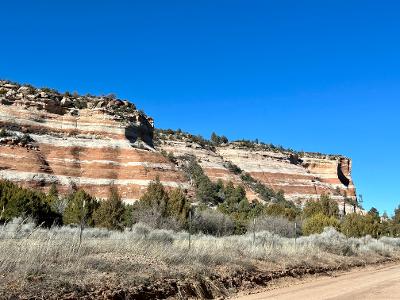
On the road to our cabin in Ramah. There were cliff dwellings in this formation that date back to 1200-1300 A.D.
So far, the April house in Santa Fe seems amply supplied. But if it turns out we are missing something my two best friends, Goodwill and Dollar Store, aren’t far away. Will let you know all about it in the next installment.
A few random photos:
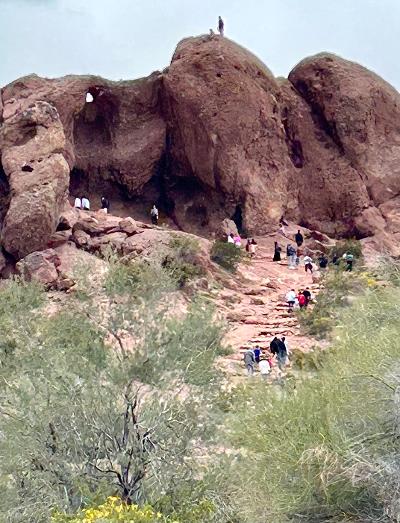
Hikers ascending one of the sandstone formations in Papago Park.

Gambel’s Quails, a flock visited the yard every evening.
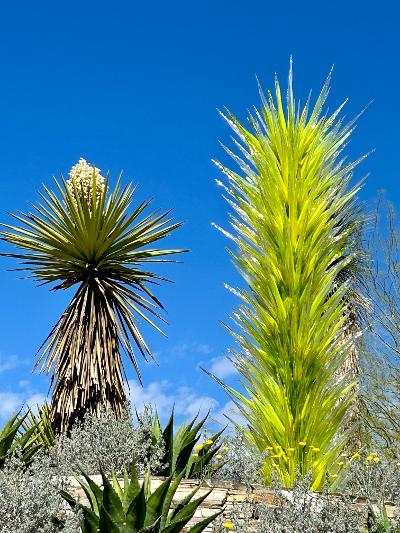
Nope, that’s not a cactus on the right; it’s a piece from glass artist Dale Chihuly’s first major installation in the Desert Botanical Garden, called Desert Towers.
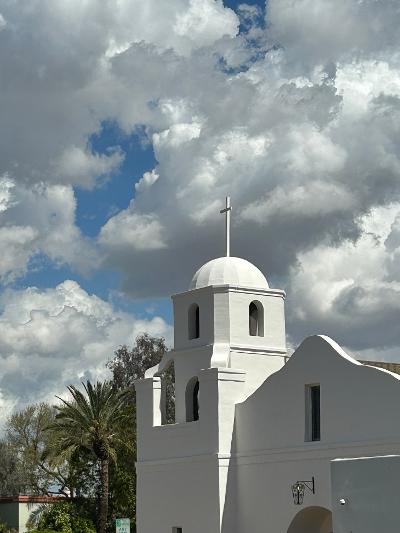
The Old Adobe Mission originated as Our Lady of Perpetual Help Catholic Church and was built by hand by the Mexicans who settled in Scottsdale in the late 1910s.
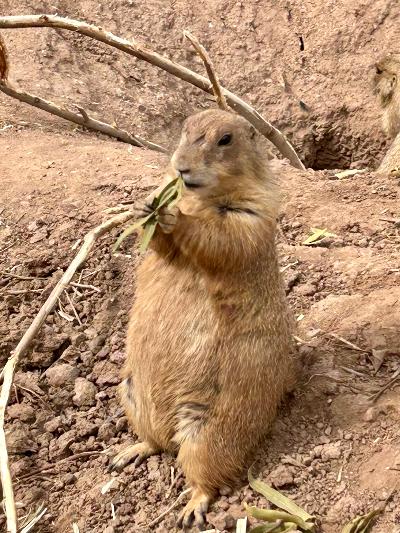
There was a whole town of prairie dogs near our cabin in Ramah, NM. They were not as chunky as this little well-fed guy who lives a life of ease in the Phoenix zoo.
-
12Months12Places #8, Florida and Texas
We’ve stayed at 14 Airbnbs by now on this caper (including the short term stays on way to the longer stays), and if you were to ask me what the most unexpected request by an owner was, I would have to say it was to “please keep the trash bin lids secured to keep the bears from scattering trash all over the yard.” Okay, yes, being from Maine that’s not that odd sounding and we’ve stayed at some places where bear issues wouldn’t be surprising (cabin in the woods across the river from Louisville, house in the hills outside of Rapid City…). But this was on the Florida coast.
When you rent a house with the marsh and Santa Rosa Sound on one side and a swamp on the other side you do expect to see some wildlife. In fact, that was the major reason we chose that location. But bears?
So, don’t feed the bears! Or the gators and snakes either, as the sign by our swamp warned.
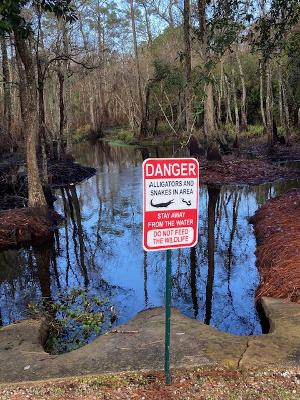
We never did see a bear or an alligator while in Florida for January. But we did have a snake visitor. He liked to sun on the rock wall between the yard and the swamp. It was either a non-venomous southern water snake or a venomous cottonmouth. The shape of the eye is one way to tell them apart – I passed on getting close enough to make that distinction!
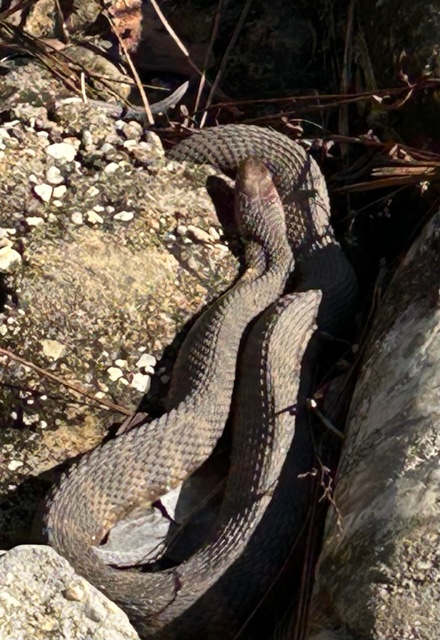
About three feet long; we let him sleep wherever he wanted to.
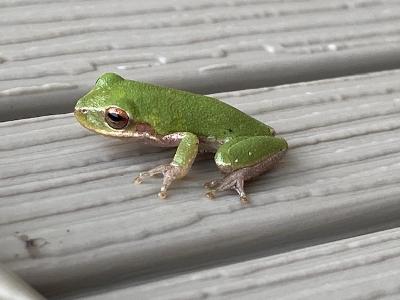
Tiny frogs were frequent visitors all over the patio.
It wasn’t until we left Florida and got to a short layover in Lafayette, LA that we saw alligators. And that involved deliberately taking a tour of a swamp to find them. Sitting in the 12-seat skiff next to a nest of baby alligators with the mother lying close by was thrilling while being quite safe. And then the guide told us how high alligators can raise themselves out of the water, basically their body length. Yikes! Later we learned that these ‘gators were peaceful and that people even swam in parts of the water’. Again, yikes!
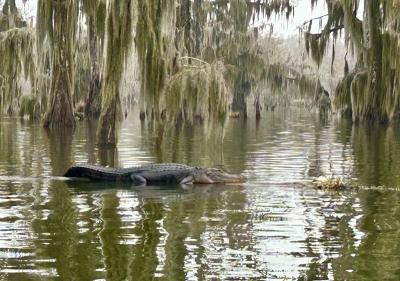
These pseudo-dangers of our journey remind me of something I read recently. In his book Deep South Paul Theroux wrote about how for travel narratives the story is the difficulty of the journey, the miseries of getting from one place to another. Theroux proposes that in modern times, especially in America, the journey is a picnic relative to the real hardships encountered in earlier, more far-flung travel. Later travel writers have exaggerated, or even manufactured, their hardships. Edward Abby, in his Desert Solitaire, fails to mention that for five months of his time facing the bleak elements of nature alone, he lived in a trailer with his wife and son, not far from a saloon frequented by his drinking buddies. John Steinbeck, it’s been noted, stayed at luxurious hotels for much of the travel he describes as struggling through a big and dangerous world.
From our pseudo-dangerous encounter in the swamps of Lafayette, LA we traveled to Georgetown, TX. Our biggest travel ordeal was not finding a Starbucks for our ‘road-day latte’ tradition and trying a Dunkin Donuts latte instead (the horror!). Georgetown, our February stay, is a town of about 70,000, about 30 miles north of Austin, built along the San Gabriel River. The little historic downtown has shops, restaurants, bars, museums operating in the 19th century buildings surrounding the town square. Georgetown is known as the red poppy capital of Texas for these wildflowers that grow throughout the area.
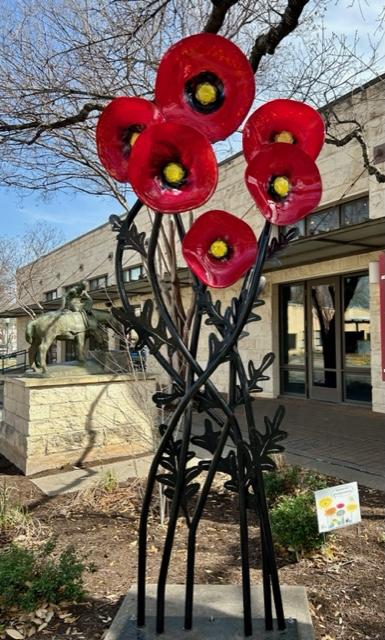
Images of poppies abound. Seeds for poppies were sent here right after WWI by a soldier from Georgetown. His mother planted them and then they spread and became a symbol of remembrance and hope for a peaceful future.
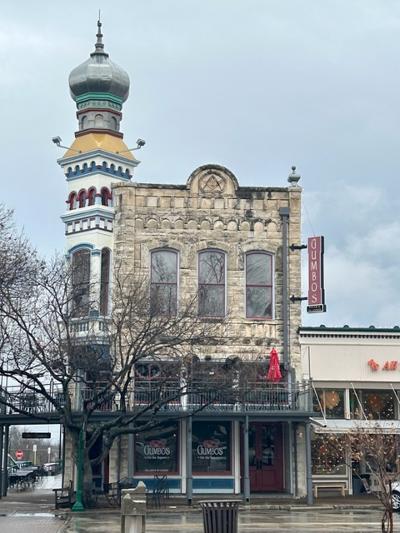
One of the historic Victorian buildings in downtown Georgetown; this was a Masonic Lodge.
An exhibit in the historical museum there reflects the stark contrast between real travel ordeals and mock travel ordeals. They have a diary kept by cowboy Robert McMordie during a cattle drive that originated in the county in April of 1886. Most days he just notes the number of miles they moved (generally 10 – 20 miles). But on April 15th he wrote of a night of record hail and stampeding cattle. Sunday the 16th, they “hunted Stampeded cattle until Dinner Hearded in the Evening.” On May 13th the entry reads, “Drove Ten miles to the River the Cattle Stopped & refused to travel for 2 hours.” Some entries mention broken axles, being chased by Indians, and hauling dead bodies.
Fortunately we didn’t have to herd stampeded cattle, ford swollen rivers, or fix a broken axle. But we’re headed west, to Arizona and New Mexico so there’s still a chance we’ll have to face some ordeal, or at least manufacture one for a good story! Stay tuned.
Other photos of January and February:
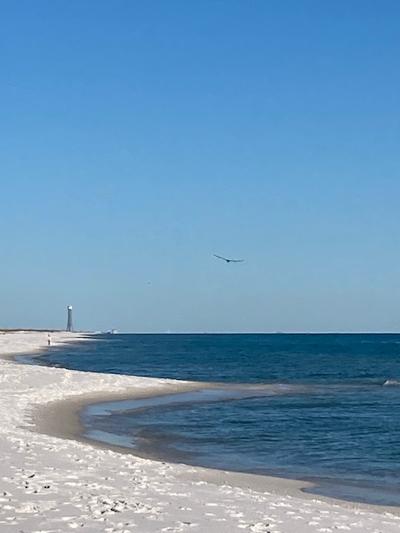
The white sands of Florida are amazing. Made up of quartz crystals washed down from the Appalachian mountains by rivers to the Gulf. I noticed that it doesn’t stick to your feet like Maine beach sand does.
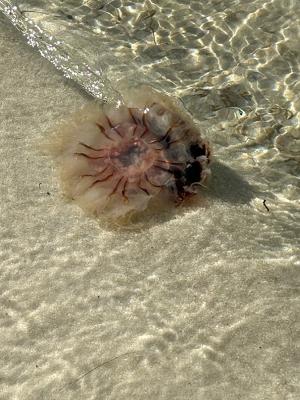
What could be a real travel ordeal, tangling with jellyfish while wading in the ocean. We saw lots of Moon jellyfish and Lion’s Mane jellyfish on the Santa Rosa Sounds side of Navarre Beach.

Shells on the beaches of the Gulf Island National Seashore Park. Despite lots of searching I never found a fossilized shark tooth.
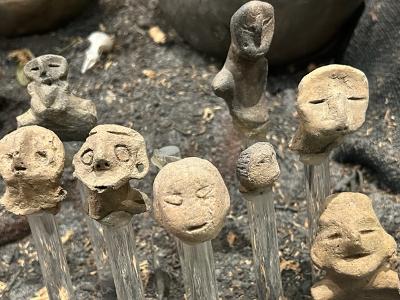
Clay effigies from the Indian Temple Mound Museums in Fort Walton. The mound was built around 850 AD. Early Europeans in the area were surprised that the local Native Americans at that time had no idea who had built it or what it was used for.
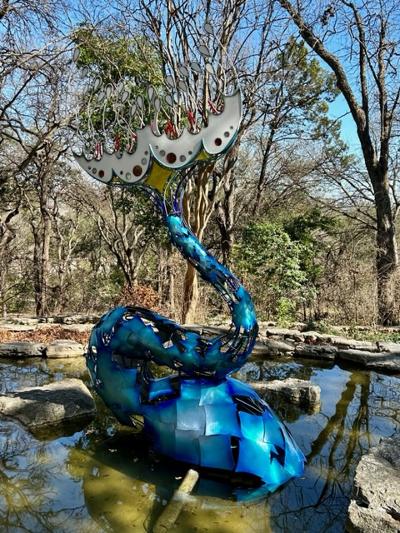
Sculpture at the Zilker Botanical Garden; explored this with Maine friends Rhonda and Tom, as well as one of the many sculpture gardens.

Inner Space Caverns, discovered in Georgetown, TX just about 60 years ago when the highway was being made. If the highway had been a bit east or west of where it was this still might not have been discovered. Deepest spot about 70 feet deep, lots of prehistoric horse, deer, camel, bear and pigs bones found, as well as an anteater-like animal that was about the size of a Volkswagen.
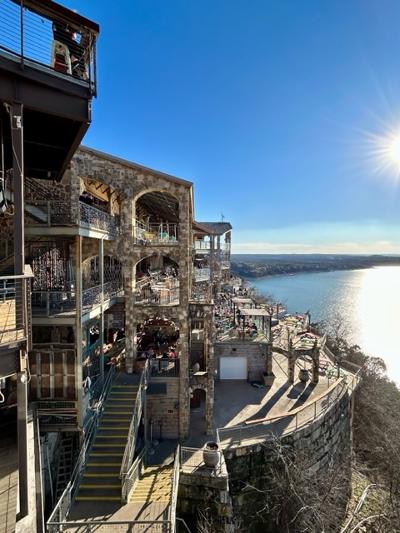
The view of Lake Travis from The Oasis, a quirky “castle” of shops, restaurants, bars, all filled with weird decor, on a bluff high over Lake Travis that Scott and Christine brought us to.
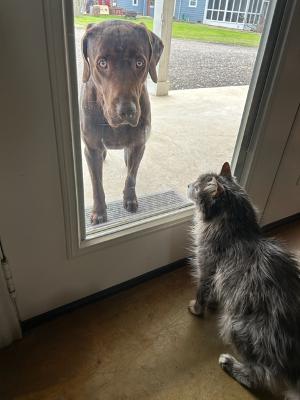
Gus wants you to know that he faces travel ordeals too. Here he confronts one on an overnight farm stay enroute to Georgetown. Although it may have been more of an ordeal for the Lab than for Gus.
-
12 months12 places #7, South Carolina High and Low
I was all set to be disappointed in Charleston. Everyone we spoke to said you have to go to Charleston. Everyone who has been to Charleston loves it. Charleston ranks repeatedly in all those magazine articles about the top ten places to live, the top ten places to retire to, the top ten cities on the East coast, the top ten historic cities….and on…and on…
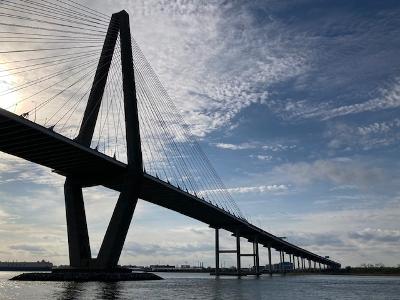
Ravenel Bridge linking downtown Charleston to Mount Pleasant.
Despite all that, we did decide to try out Charleston, even though we might be disappointed: it fit our trajectory, weather looked right for December, and everyone said…
So, now I am saying, if you go to South Carolina you have to go to Charleston! I’m a convert. And December is a great month to be there. November we stayed in Greenville, South Carolina. I have to say, go there too!

In Greenville, not the largest zoo we’ve been to, but nice. We could walk to it and could even hear the lions roar from our house.
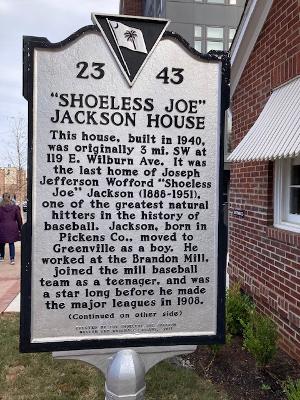
One of Greenville’s claims to fame. Besides the baseball memorabilia it still had some of Joe’s and his wife’s effects, even monogrammed towels in the kitchen.
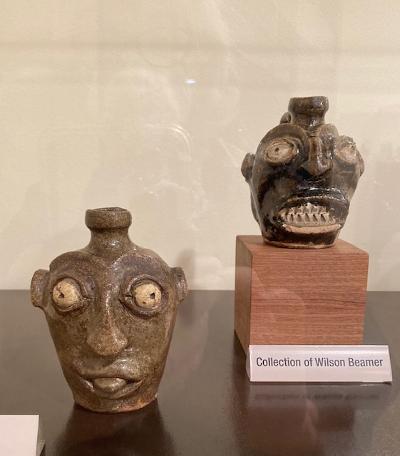
From the collection of face jugs at the Greenville art museum. Face jugs were created by slaves in the Carolinas and Georgia in the late 1800s. The distinctive style is similar to ritualistic objects of western Africa.
Even though we stayed two places in the same state, they were very different. For people like me, unfamiliar with the regional differences, it’s been interesting. There are the lowlands, basically the Atlantic coastal plain, and the uplands, or upcountry, which is the Piedmont and Blue Hills regions. According to history, the Upland thought the Lowcountry was stuck up, the Lowcountry thought the Upland was all backward hillbillies. During the beginnings of the Revolutionary War Lowcountry patriots fought Upland loyalists. During the Civil War this antagonism continued based primarily on their economic differences. The subsistence farmers of the Upland had few slaves; the Lowcountry plantation system was highly dependent on slave labor.
Being in Charleston is being surrounded by history. The city considers every building in the downtown area that is over 75 years old to be historic. Any repairs have to be in the same character as the original. It means there are many gorgeous old buildings in the downtown area. Does it also mean that the McDonalds on Spring Street since 1954 may be a historic site in 6 years?
Many of the old houses have privacy doors. These are doors that bring you on to an open porch where people would sit to cool off during the summer heat. Even though you might be able to see into the porch standing at just the right angle on the street, if the door was closed, come back another time. If the door was open, visitors were welcome.

Privacy door closed, come back another time.
There are lots of beautiful plantations to tour with historical displays, even reenactments, but a working one – the Charleston Tea Plantation – is the only tea-growing garden in North America. Who knew we grow tea! My friend Deb came to visit and this was top on our list to tour. It started in 1888 when a farmer in a nearby town imported tea plants from China. The farmer died in 1915 and the long-lived plants essentially grew wild there for 45 years until they were moved to the Charleston plantation. All the plants on the current plantation are descendants of those first ones. They use a custom-designed tractor to harvest just the top six inches of new growth from the plants, typically getting about 18 harvests per season. The tour included all the tea we could drink of course.

Tea plant blossom; they blossom in the fall which indicates
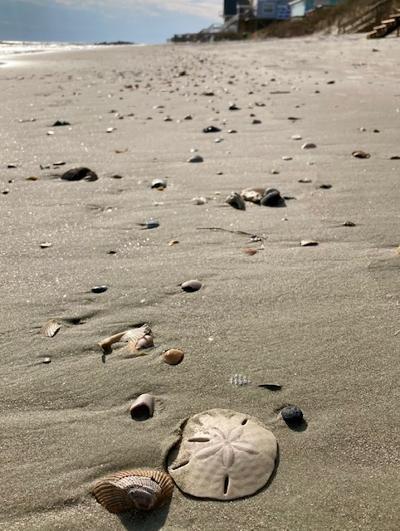
the end of the harvesting seasonFor John and me, part of the highlight of being in Charleston was being back at the ocean. A ten-minute drive brought us to Folly Beach, a great place to walk, find shells, see birds, and we even spotted dolphins a couple of times.
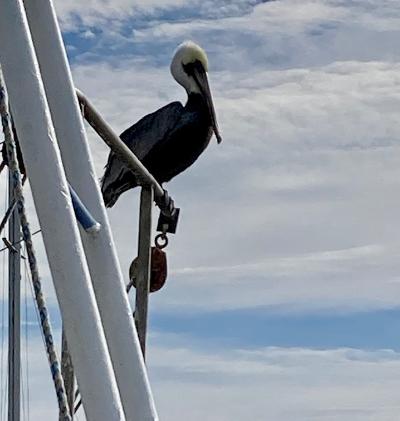
Brown Pelican, exciting for a Northerner
to see, but common here.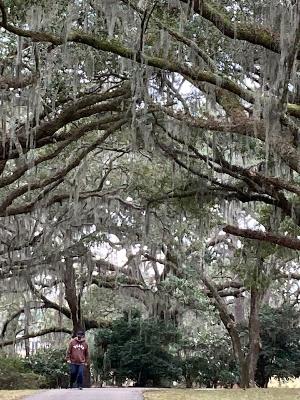
Spanish moss hanging from the trees.. It is neither Spanish nor is is a moss, but it is everywhere. In the bromeliad family and actually related to the pineapple.
We took a boat trip of the marsh for even more immersion in the coast and got good views of the Morris Island Lighthouse, built just after the Civil War ended. Even at the beach there’s history–after all, Fort Sumter is just across the water. Built for defense during the War of 1812 it was never used then but was the site of the first shot fired during the Civil War.
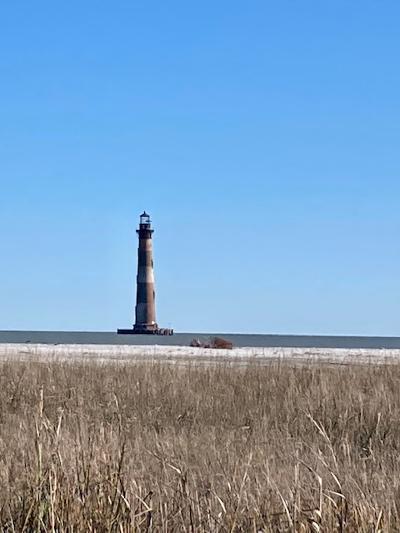
Morris Island Lighthouse
Another part of the charm was our favorite spot for a beer and nibbles, the Ellis Creek Fish Camp, conveniently under two miles from our house. So, I’m joining the chorus, you’ve got to go to Charleston and if you do, make sure to check out the Ellis Creek Fish Camp.

We’re beaching it now in Mary Ester, FL. Not as much history, not as much charm, but the whitest sand and most brilliant green-blue water you can imagine. More on that next time.
-
12months12places #6, Across the Wide Missouri
You know how annoying it is when you’re in a hotel, asleep, and around 1:30 in the morning somebody who’s just checked in walks down the hall past your door calling to each other, “here’s the room, down this way” or “do you have that suitcase with my pills?” or “what time is breakfast?” No awareness of anyone else or thoughts to being quiet. So, instead of sleeping, you lay there fuming about inconsiderate people. Well, that doesn’t happen when you stay in an Airbnb.
Just one of the advantages. I’ve been listing the good points in my head because of the spate of articles recently about the problems with Airbnb. Some issues include the chores you’re asked to do before leaving, last minute cancellations, oppressive house rules, potential spyware, and the negative impact on available affordable housing. We have, so far, been very lucky. Rules have been reasonable, chores are minor, generally just: strip beds so they know which ones you’ve used, put dirty dishes in the dishwasher, bag and take out the trash. We tend to do more than that anyway just out of pride – and we want those “excellent guest” ratings 😊. No spyware (I think!!). Can’t do anything about the impact on affordable housing though…

Not our usual type of location but this cabin just outside of New Albany was just so cool, and we had a gorgeous sunset. Part of our luck might be down to always staying in houses owned by a “Superhost” – an Airbnb quality assurance rating. And only staying in places with good reviews from previous guests – – and carefully reading those reviews. We passed on renting some places that looked really good but reviewers mentioned a detail that might not have been an issue for some but wasn’t what we wanted (noisy road, shared backyard, barking dog next door). One aspect we do look for is a “walkable” area, preferably near a trail or in an interesting part of town. That was high on the pluses of the house we stayed at in Washington, MO for two days: in a great little town to explore AND within 2 blocks of the river walk, a scenic trail along the Missouri.
We knew we were going to be near a river walk but hadn’t realized until we crossed the bridge into town which river it was, the Missouri. We intentionally crossed the Missouri a few times during our month in Omaha: walking on the pedestrian bridge spanning the river, over to the Lewis & Clark trail on the Iowa side, over to a museum in Iowa City, and then when we left the city to head to our next stay. And then at least four more times just driving from Omaha to Washington, MO. We felt like we really saw that river.
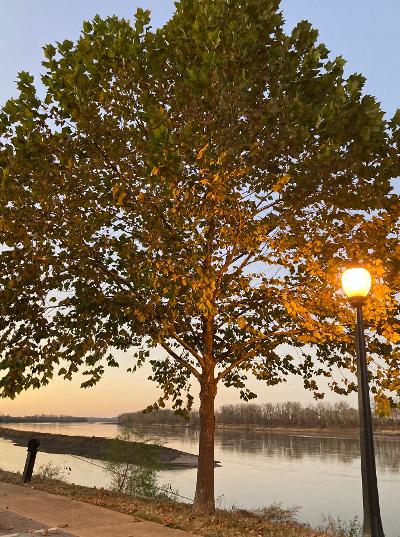
Missouri River sunset
There is something special about small river towns, where the river has been a driving force in the city. This town was settled by German immigrants in early 1800’s. There was a natural river landing making it a good site to settle. Crossings were by ferry boat for a long time; a bridge wasn’t completed until the 1930’s. In 1854 a brewery was started and the first Busch beer was bottled. A factory making zithers came after that and then a factory making corncob pipes. Washington is known as the Corncob Pipe Capital of the World (or so they say in town). The town has preserved a lot of the old mills and lovely old houses.
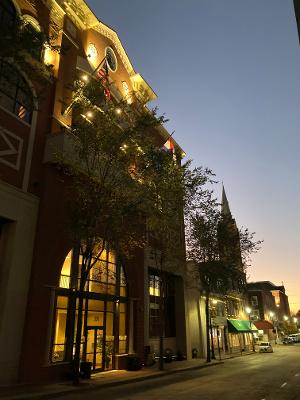
nighttime walk in Washington, MO
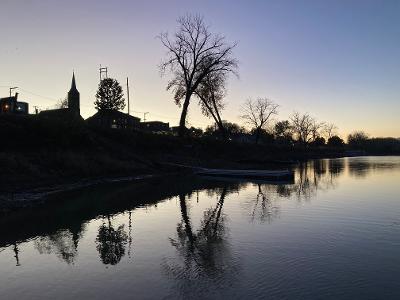
town and river view at night
The Missouri meets the Mississippi just east of Washington, near St Louis. We left both behind as we headed to our next river town stay, New Albany, IN which is just across the Ohio River from Louisville, KY. The original reason for our stop here was to tour the Louisville Slugger factory and museum.
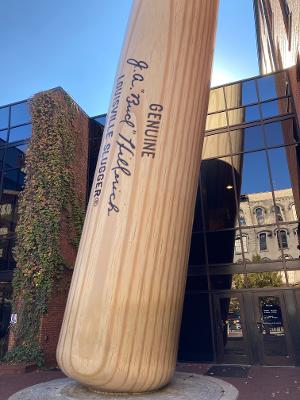
Louisville Slugger Factory entrance
That place was quite interesting but even more intriguing was the Carnegie Center for Art & History in New Albany. For a small town (about 38,000) it is an impressive building. But it was built back when that’s what the uber-rich did to preserve their legacy (and expiate their sins) – – the 19th century equivalent of today’s trips into space. In addition to the art exhibits, the museum had a fascinating, and disturbing, exhibit about the history of the Underground Railroad, specifically as it existed in that area. Just across the Ohio River, Kentucky was a slave state while Indiana was a free state. Understandably there were a lot of slaves fleeing from Louisville, across the river, sometimes dying in the attempt. This led to much conflict, not only between the two cities but within New Albany itself. Not everyone there supported the movement and even for those who did the consequences of getting caught were severe. A federal law for much of that time allowed slave hunters to capture runaways anywhere, even in free states. It was only upon getting to Canada that a runaway slave was truly safe.
Here there was a river dividing the factions. It must have been even more confusing, unsettling, where the division between free state and slave state was just an invisible state line through the countryside.
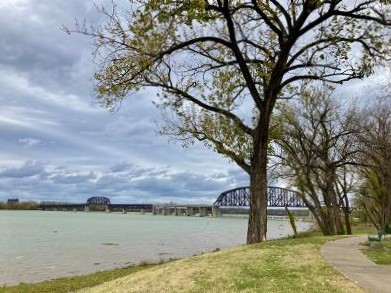
Bridge across the Ohio River from New Albany side
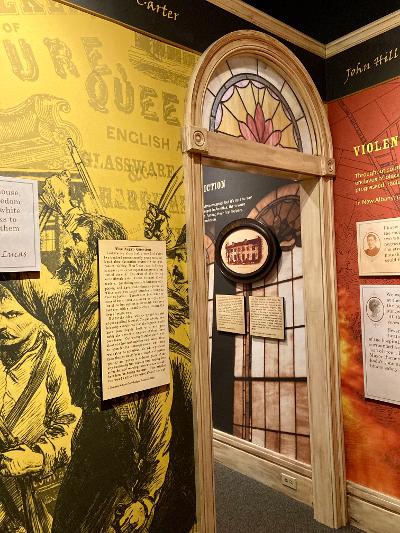
part of the Underground Railroad exhibit in beautiful Carnegie building
Our long-term stay for November is in Greenville, SC. It is a vibrant small town (pop 75,000) with an Old Port-like downtown, lots of public art, and the 20-mile Swamp Rabbit Trail for walking/biking. The trail was built on the bed of an old railroad and is named after a rabbit indigenous to the area. And another city with a river, the Reedy, which flows along much of the trail but as its name implies, it’s not a big river, more of a stream with some pretty waterfalls. On yesterday’s walk we saw a great blue heron fishing in the river and a kingfisher flew along the banks. Hopefully before we leave here we’ll see a swamp rabbit! Will let you know if we do.
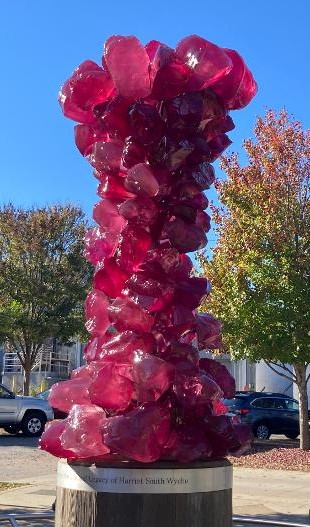
Dale Chihuly sculpture, downtown Greenville
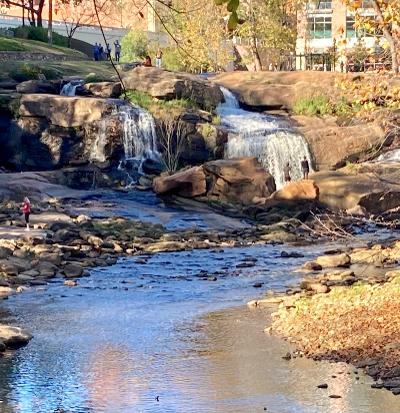
Falls Park on the Reedy, downtown Greenville
-
12months12places #5, Odds and Ends
Scrambled eggs, a couple of fishsticks, and leftover spicy Chinese eggplant; does that sound like a well-rounded dinner? Not exactly hitting all the food groups. But the last meal before we move on to a new place is always an odd combination because I hate to throw away food. Everything was well seasoned, though: scallions in the eggs and on the fishsticks and basil and mint on the eggplant. Using up the windowsill herbs.

basil, carrot tops, scallions, mint I miss some things traveling like this: friends/family/ocean and, even, having houseplants. I miss their beauty and the routine of caring for them. My solution is buying a couple of those living herbs, like basil and mint, that grocery stores sell for a few dollars. And I regrow things from scraps, like carrot tops and scallions. A little indoor greenery, something to tend each day, and flavors to add to our meals, no matter what odds and ends we’re eating. If I have to throw some of these “scraps” away before we move on, that doesn’t seem so bad.
Another odd combination in Billings were all these very small casinos (the size of a 7 Eleven store) mixed in with regular commercial businesses in certain zones. One major stretch of east-west road in the middle of the town had a casino about every 6th business, on both sides of the road, for 5 miles or more. This isn’t particularly a tourist destination so you have to wonder how all these small casinos are staying in business. I probably should have tried out Lucky Lil’s next to the Toyota dealership while I was waiting for them to fix our car. Maybe I would have made enough money to pay for the new tires. HA! Not likely.
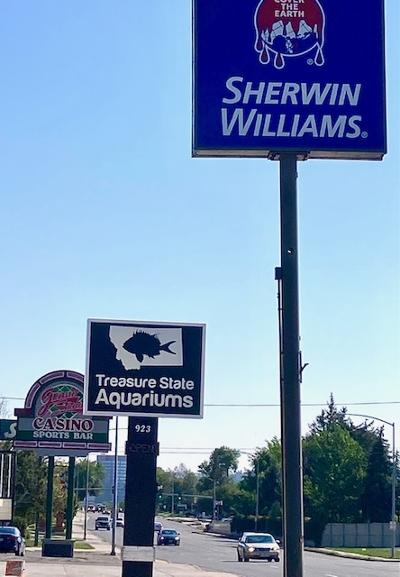


Maybe I should have tried my luck 🙂 We have a new travel model; rather than head straight to our new destination from the previous one, we might stop along the way for a little exploring. So, from Billings we travelled to Rapid City, staying there for a couple of days, then on to Winner, SD where we stayed for two days, then finally here to Omaha for the rest of October.
We would have gone to Custer State Park while in Rapid City because I and some friends had such a great visit there a few years ago, but it was the big buffalo roundup weekend. They expected over a thousand spectators converging on the area, so we envisioned sitting in long lines to get into and then out of the park. The park service uses volunteers to round up the buffalos. To be eligible to participate applicants are told they must have their own horse which must be: shod, able to react quickly, able to jump downed trees, and willing to ford streams. I would hope the horses are also used to cows at least, even if they’ve never seen a buffalo! My childhood ambition was to be a cowgirl. Darn, if only I had a horse with me instead of a cat.
But Rapid City was still well worth the stop. We visited Journey Museum, a great museum with exhibits ranging from the creation of the geology, the dinosaurs that inhabited the area, the prehistory human inhabitants, the Native American culture, to the coming of the pioneers and the effects of gold mining. Next was a drive through Bear Country USA, where we did see some buffalo, in addition to elk, wolves, big-horn sheep, and many, many bears. Add in a few local hikes, a coffee and walk downtown, and Rapid City was done.
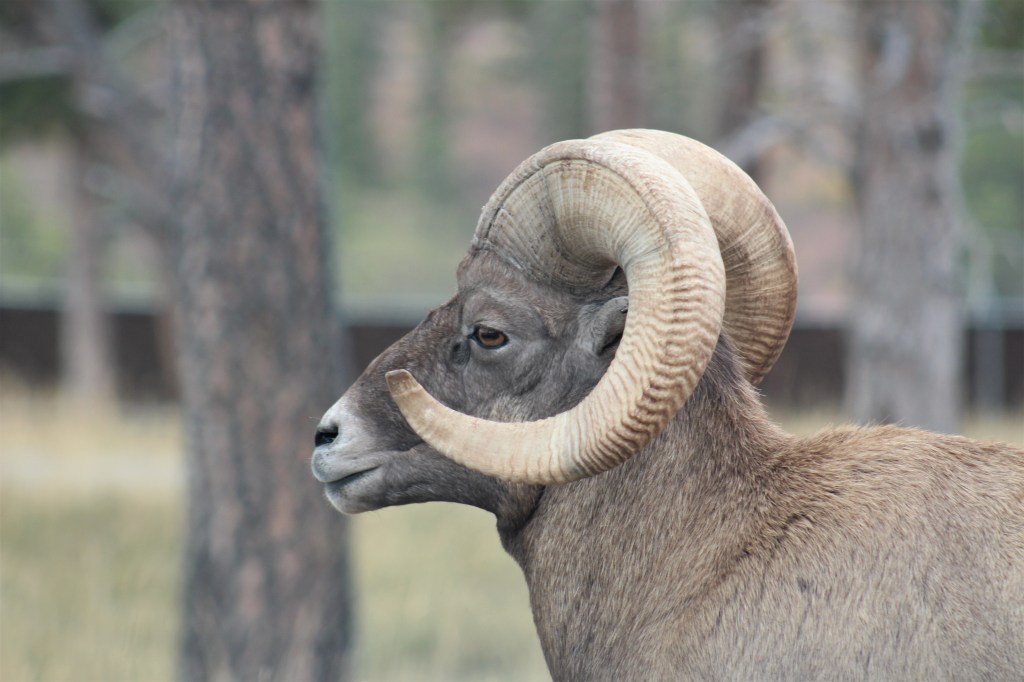
Big horn sheep 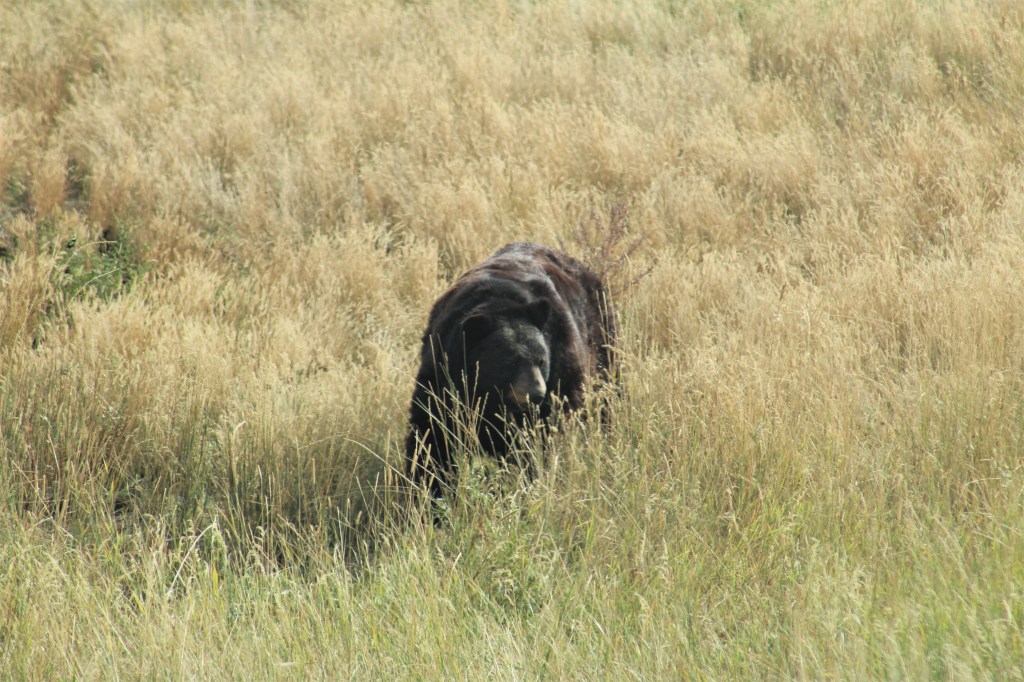
One of the many bears 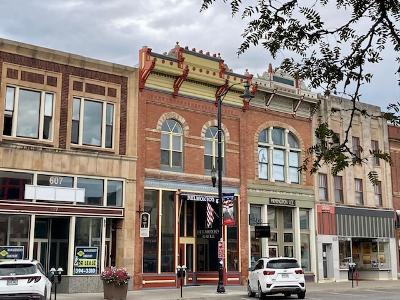
Downtown Rapid City 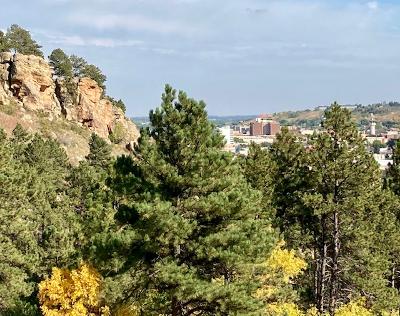
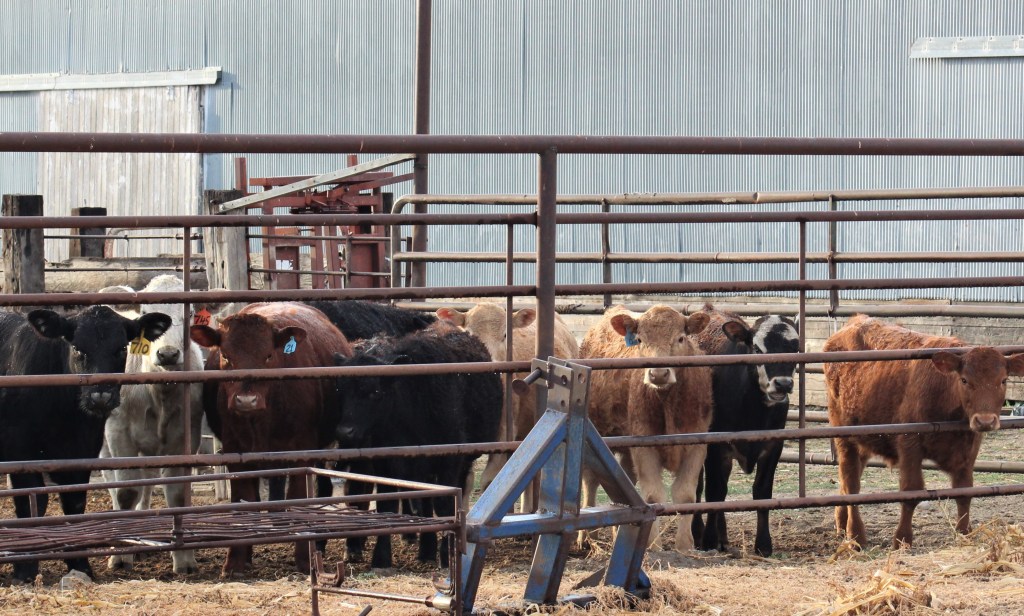
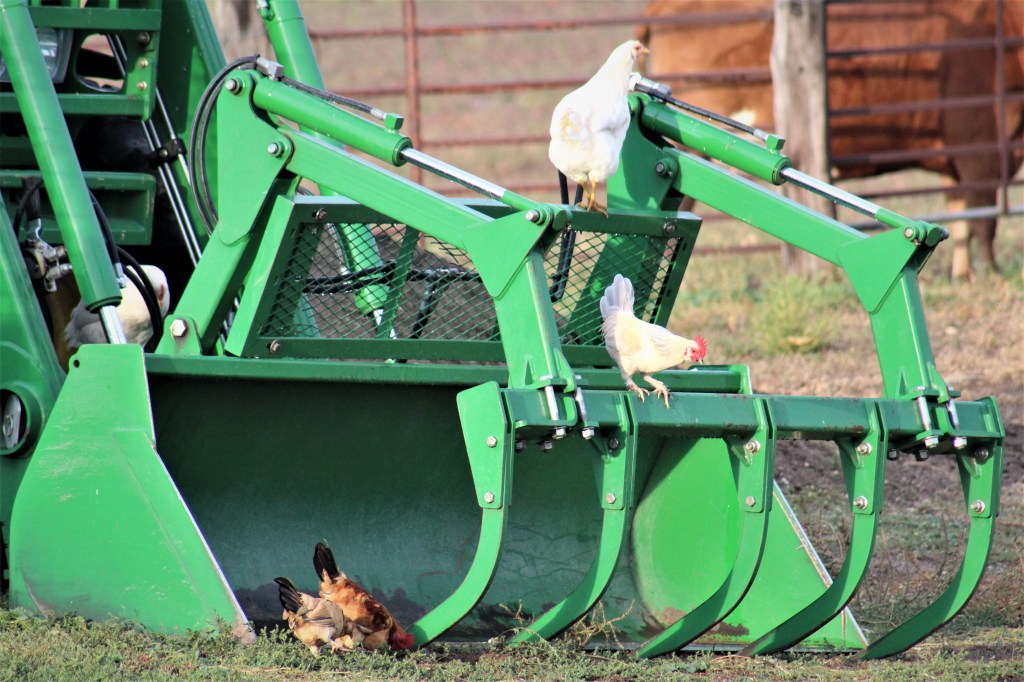
hiking right in the city If you ever want to be the center of attention, walk past a group of cows. Their heads follow you in unison as you stroll by. It’s not fear, not looking for food, just pure curiosity. The horses were only semi-interested in us, the chickens just want to play on the farm equipment, and guinea hens are in a world of their own.
In Winner, SD we stayed in an Airbnb old farmhouse on a working ranch. The owners, Joyce and Rick, lived next door and were so informative about ranching, roping and rodeoing. The ranch, and the house we stayed in, has been in Rick’s family for five generations. The house was ordered from Sears catalog and has just a few alterations from the original. A charming old house that could have been my grandmother’s – if she had lived in the west instead of New England.
Ranching is hard, can be iffy financially, and the ranchers don’t view their animals sentimentally. So it was such a hoot when we asked Rick what the guinea hens were for (i.e. do you eat them? or sell their eggs?) and were told that they just thought it’d be fun to have them around. The fowl are noisy, ever busy scurrying around, always in a pack. And they just make you laugh. It’s fitting that the collective noun for a group of guinea hens is a “confusion”! We watched a confusion of them chasing after a flock of wild turkeys that went through the yard. We weren’t sure if the guinea hens were chasing the turkeys out or just wanted to join in with their bigger cousins.
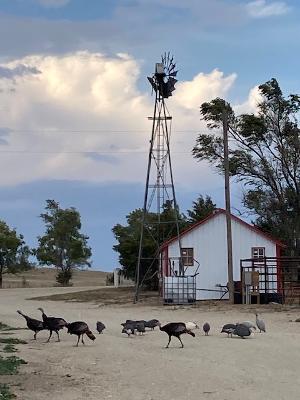
wild turkeys being followed (chased?) by guinea hens So, other than the charm of farm animals, why Winner, SD? Winner is just east of the Rosebud Indian reservation where John taught school in the early Eighties. We visited the school, some surrounding towns that John used to frequent, and a friend of his from those days. As much as you hear how depressing reservations are, the parts of the Rosebud that we saw were not as bad as I expected. And the landscape is beautiful. What did strike me, though, were the number of hungry looking dogs we saw roaming around. We Easterners are so used to dog leash laws, fenced yards, dogs being walked (and poop picked up). We just don’t see a lot of dogs roaming loose anymore, even in the country.
Billings has a population of about 110,000, Rapid City about 76,000 and Winner, SD has a population of 2,821. We took all local state/county roads from Winner to Omaha rather than the interstate. There were stretches when we saw a car maybe every half hour but saw hundreds of cattle every ten minutes and nothing in between.

Omaha is a bit of a shock after the vast emptiness of South Dakota and western Nebraska. So far (based on just three days here), it’s hard to get a feel for the character of this city. It’s not as big as Minneapolis but I don’t get the sense of place that I did there. But time will tell. More about that next blog.…
-
12months12places #4, Billings, MT
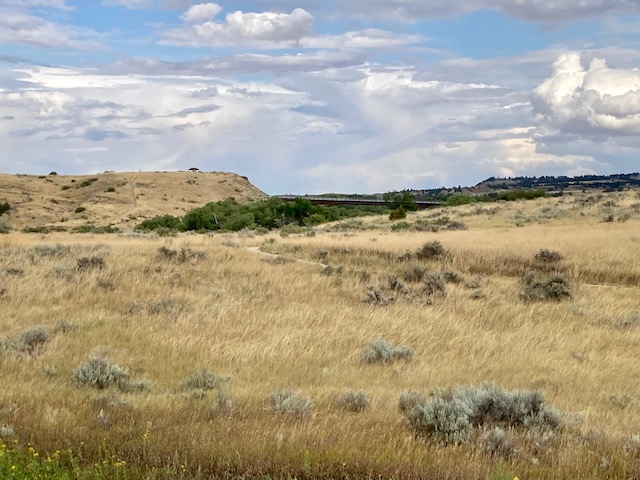
Here we are in the land of big: big sky, big rock formations (like the Rimrocks), big parks (like Little Bighorn National Monument), big ranches, big cowboy hats and big audiences at the local high school football games at the stadium (we’re within cheering distance). But I’ve been focused (okay, obsessed) with the little details of the houses in our neighborhood.
The house we’re renting is just on the edge of the area of town called the North Elevation, a neighborhood included on the National Register of Historic Places. The boundaries are surprisingly precise: Twelfth Avenue to the north, Ninth Avenue to the south, Thirty-second Street to the west and the alley behind Thirtieth Street to the east. (Alleys are another subject of interest to my rural-raised self; John grew up with alleys in the Chicago suburbs, used by the kids for getting to each others houses and for playing.)
The North Elevation was deliberately established as a subdivision of the city in 1905 when Billings was a rapidly growing city. The promoters advertised panoramic views and promises of living near “the best families” in this new neighborhood, while being within walking distance of the downtown. And walkability was an important feature; the concrete sidewalks were considered a major draw. Until the automobile became common, that is. In 1913 the advertising for houses in the subdivision focused on the miles of “smooth-graded” roads.
I condensed the above information from a plaque at the edge of the designated historic area. Houses that are part of the designation each have a plaque on their front lawn explaining their significance. The details include the date built, the type of house, relevant structural details, and a few – often odd – details of the first owner or a subsequent long-time resident. I only know a couple of people who (maybe) share my focus/obsession about the houses and the details, so here are just a few of many I’ve collected on our neighborhood walks, with just a few details from each of the plaques:
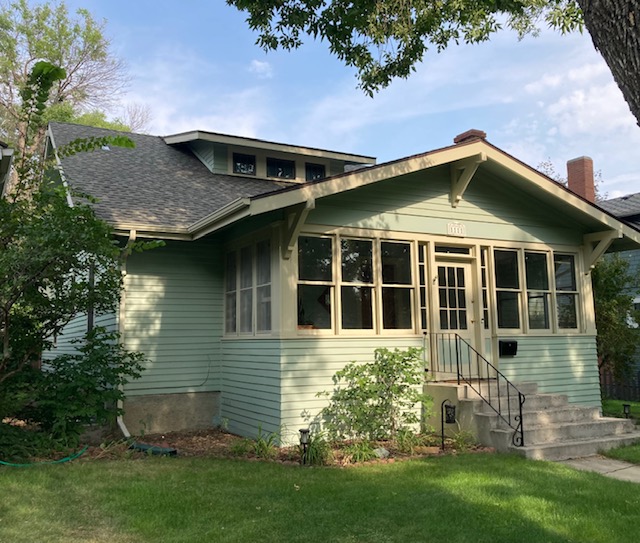
Built in 1916, Craftsman bungalow with “knee braces ornament wide overhanging eaves.” “Walter Foster, the superintendent of a meatpacking company, purchased the home in 1936. His wife Louie May continued the familiar social whirl, hosting bridge parties, the Congregational Woman’s Society and other familiar function.” 
Bought by Clinton and Inez Warner in 1919 for $1,500, a Colonial Revival, considered a modern design at the time. “…it featured a tuck-under, or integrated, ground-floor garage, accessed from the home.” Most garages were detached buildings. “Cars were important to the Warners. Gladys, the second-oldest, usually drove the short distance to Billings High School.” 
Built in 1932 for Juluis and Anna Clavadetscher, a Greek Revival style, with a pediment entryway and multi-pane transom window. “A talented cellist [Julius} joined a musical ensemble that accompanied silent pictures at the Strand Theater.” 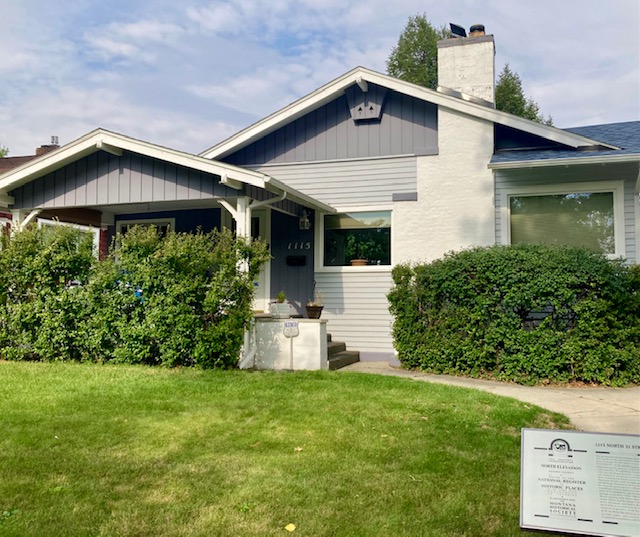
Built in 1920, prominent brick chimney is Tudor style, with other common Craftsman-stye features. Owner Jerome Kohn, a cigar salesman, won $300 in gold in the 20’s for selling the most Billings Gazette subscriptions. “Had he won the grand prize, a Hudson sedan, he would have had to park in the street, Unlike most of its neighbors, this house did not have a garage until after 1958.” 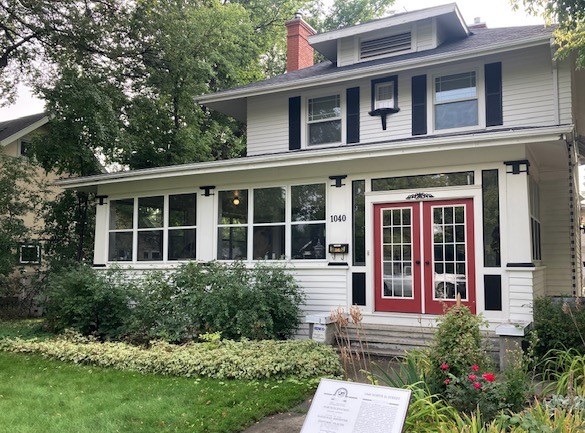
Built in 1913, a Prairie style house, a two-story foursquare house with restrained geometric ornamentation. “Home prices suffered during the Great Depression and the residence, valued at $10,000 in 1930, was worth only $6,500 in 1940. 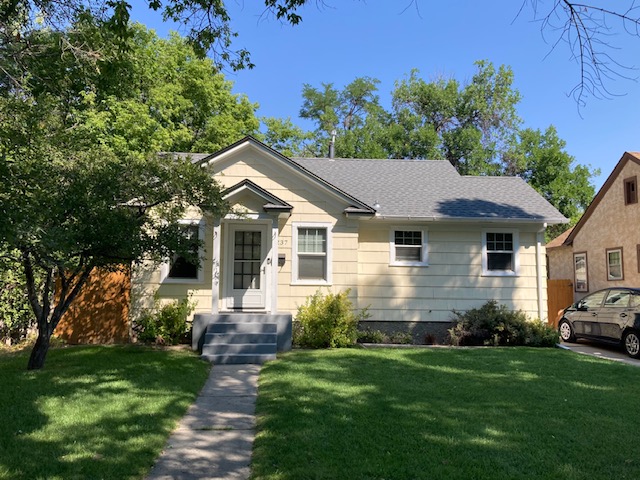
Built in 1925, a charming Cottage style house, currently valued around $300,000, assessed $2,000 in annual property tax, and for September 2022, the residence of Marie, John and Gus. Next blog I will try to write about bigger things! Such as the pictograph caves, the zoo, Pompey’s Monument, etc…..
-
12months12places #3, Minneapolis, MN
I swear it slipped my mind when I bought that box of Doves Bar Minis, the 14 little chocolate covered ice-cream bars. Honestly, I totally didn’t think about the fact that it’s only 6 days until we leave Minneapolis to head to Montana and that we would need to each eat 1.17 bar per day to have them gone before we leave. But, I think it’s do-able, I really do 😊.
The time in Minneapolis has flown by. This parceling out our life in one-month stays may make it all go way too fast, always being aware of the pending move (except when grocery shopping in the ice cream aisle). Time moving too fast may not be that desirable at our age!
But we have a week left. Lots to do and find still. Being in Minneapolis is very much about the river and neighborhoods. Every place you plan to go the questions are: which side of the river is it, east or west? then is it north or south section? then which neighborhood? Which all really matters since getting to the right place depends on noticing that it’s 3rd Avenue Northeast, not 3rd Avenue Southeast. Or that it’s 3401 Buchanan Street in St Anthony East neighborhood, not 3401 Buchanan Street in Roseville. Or anyway, it matters if you really want to get where you’re planning on going versus a sometimes less-than-serendipitous discovery. But sometimes it leads to something you are happy to find accidently. That’s how I found what has ultimately become my favorite grocery store in this city.

We’ve walked across the Mississippi River at two places now. I’m not talking about actually fording the river; we walked across a dam at the Mississippi River Gateway Park north of the city and walked across the Stone Arch bridge, a 2100 foot, 23 arches, old railroad trestle made into a foot/bike path between downtown East and downtown West. It makes me think though about how hard, and scary, it must have been for the settlers moving whole households west without benefit of bridges.

Coon Rapids dam 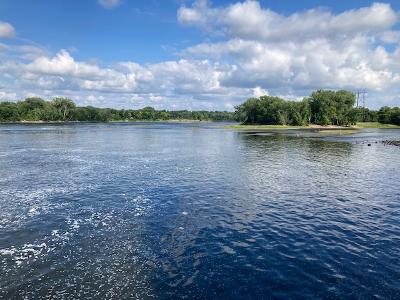
Mississippi River from the dam 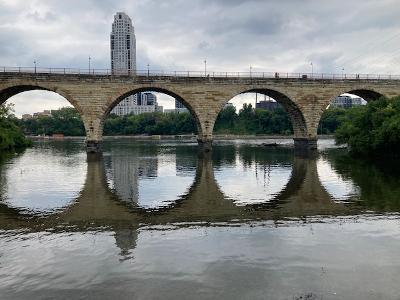
Stone Arch bridge 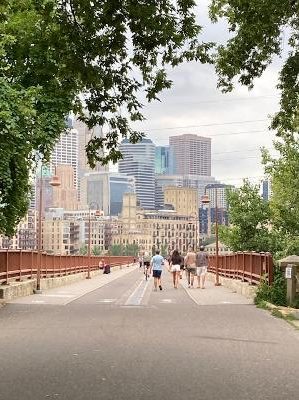
heading to the west side on the Stone Arch bridge The west side of the river has the big, sophisticated downtown. Lots of tall buildings with the Skyway System – about 10 miles of contiguous enclosed bridges that go at the second story level from building to building, temperature controlled. Besides keeping traffic moving it keeps walkers more comfortable and safer. We’ve headed to the west side of the river for the Minnesota Institute of Art, for the Minneapolis Sculpture Garden, the River Gateway Park, the airport, and places by accident (like I said – you’ve got to watch those addresses).
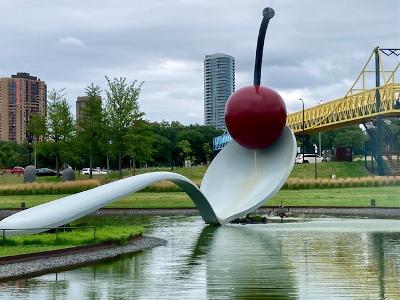
Sculpture Garden A notable feature of the city is the juxtaposition of the old and new, commercial and residential. Old grain elevators next to shiny glass-sided skyscrapers. Lots of old mills repurposed into commercial and residential spaces. A functioning steam mill next to an arts center. The skyline has lots of old commercial signs left on the tops of buildings: Pillsbury’s, North Star Blankets, Gold Medal Flour.
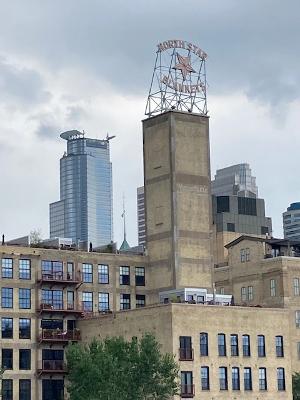
old and new 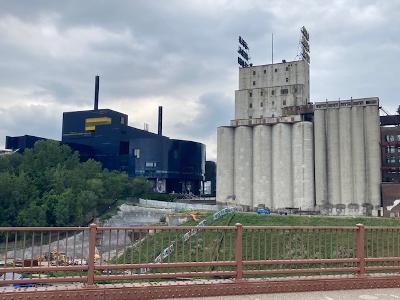
grain elevator next to theater The house we’re in is St Anthony East, a Northeast neighborhood, just a couple of miles east of the river. Lots of small bungalows, mostly built in the 40s and 50s. It’s very hilly; between here and the park we walk to most days we go up or down half a dozen times. Houses have steep stairs from the road to their front door. A house’s top floor windows may look straight into the neighbor’s ground floor. It’s a neighborhood with lots of people walking, bicycling, running. And in winter, sliding, I’m sure.
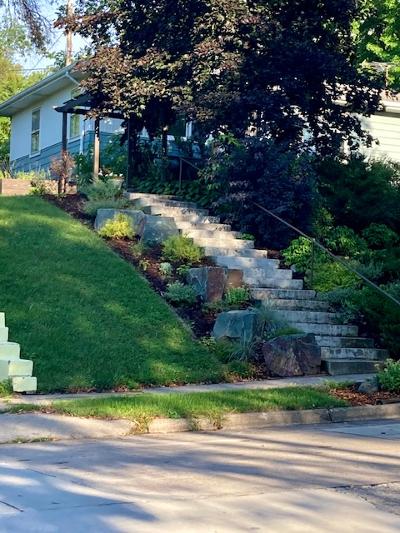
everywhere’s a climb Our east side adventures have included the Weisman Art Museum, University of Minnesota, the Old Port like area called St Anthony Main, Como Zoo, a number of neighborhood parks, farmers’ markets, and next week – a St Paul Saints minor league baseball game. St Paul has a whole downtown we’ve not even gotten to yet. So much to do, so little time.
Guess I’d better go eat one of those Dove mini bars now if we’re going to be on target for leaving.
Marie, John and Gus
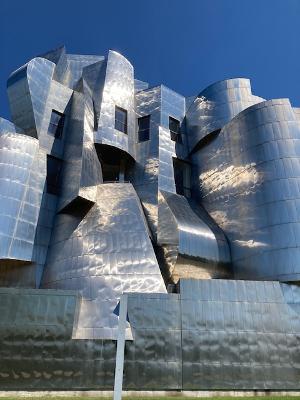
Weisman art gallery on U of M campus -
12months12places #2, Naperville, IL
Look! A seagull!
Not something you expect a Mainer to shout. But context is everything. I’ve gotten used to seeing gulls on Lake Michigan after years of visiting Chicago. I was astounded initially at how ocean-like Lake Michigan is. No tides and – – I haven’t tested this, yuck – – no salty taste. But otherwise, Lake Michigan (and probably all the Great Lakes) can act very ocean-like and has gulls, lots of gulls.
But this sighting was on the Fox River, 40 miles west of Michigan Lake. It was one of the smaller gulls, probably a herring gull. A standout among the mallards, American Black ducks and Canda Geese on the river.
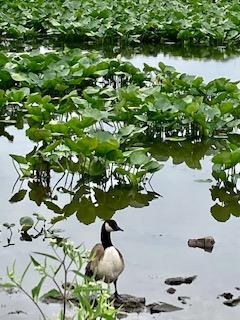
The Fox River Valley has been the locus of my explorations while we’re here. It’s an area running north to south just along the western edge of the Chicago metropolitan area. “Our” town, Naperville, abuts Aurora which is on the river. The river towns I’ve been to so far, heading north: Aurora, Batavia, St Charles, Geneva and Elgin. Hey, new idea, that would be a great trip, exploring the whole river valley, stopping in each town from Antioch in northern IL to the southern end in Ottawa where the Fox River meets the Illinois River. I want to do it!
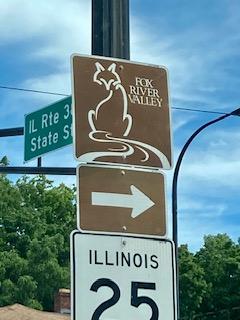
River towns are interesting, especially some of these Rust Belt towns. Such a mix of old and new, prosperous and distressed, scenic and degraded. In Maine we’re used to the sister cities on the rivers, one city where the mill workers lived and the “nicer” city on the other side of the river where the mill owners lived. These towns in the Fox River Valley span both sides of the river and the areas seem more mixed, not as clearly delineated, although there are apparently distinctions made by the residents. A friend with whom I had lunch in downtown Elgin told me there is a definite east-vs-west-side of the river social distinction at play in her town. Yet I found the iconic Old Style beer sign on both sides of the river!
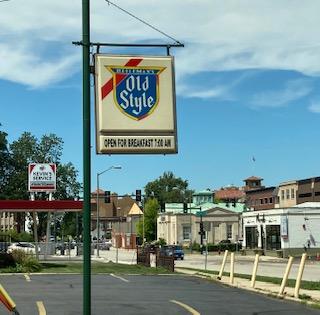
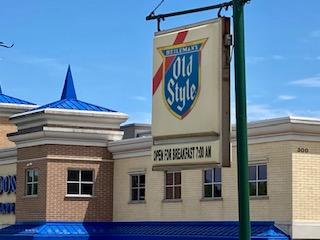
River-side parks, walkways and restaurants with patios are a feature in all these towns. They have all carved out lovely public spaces among the commerce. And long stretches of the river have walking/running/biking trails. As well as that Illinois phenomena, the casino riverboat. I know a few other states have these too but in Illinois if you want to gamble you take a riverboat “tour” even though the boat never leaves the dock, ever. But take a drink to the top deck of the boat (where they never provide deckchairs because they want your fanny in those seats downstairs in front of the slot machines) and you can feel like you’re on a cruise as long as you don’t watch the shore too closely.

I’d like to go to all the towns but the complete Fox River Valley tour will have to wait. Hard to believe but we leave in a week for our next stop, Minneapolis, MN. Still lots to do here before we leave: more time with family, another trip to downtown Chicago (which unfortunately is mostly Altrusa working time), another farmer’s market to catch, a few area bookstores we haven’t hit yet and, hopefully on a cooler day when the animals are more active, the Brookfield Zoo.
For those who have been asking, here is the when/where/why of our -maybe- itinerary (you know the who and what already):
August – Minneapolis, MN – because neither of us has ever been there and it’s supposed to be a fabulous city
September – Billings, MT – to get somewhere west before we head back towards the east coast, near Yellowstone (if not flooded away still), pictographs, stunning geography, college town vibe, and it was suggested by a travel-guru friend.
October – hmmm…maybe Omaha, NE, maybe Lincoln, NE, maybe DesMoines, IA, we’re open for suggestions for that general area
November – hmmm…maybe Lexington, KY, open for suggestions that are on the way to our next stop
December – Charleston, SC – because everyone who has been there loves it, the weather will be perfect for December, it’s always in the top of all those best cities to live in/visit lists, because a friend has already made her reservations to come visit us there!
January – somewhere on the Florida panhandle – good weather, ocean, near where some family may be then. Suggestions for specific towns welcomed.
February – Galveston? Corpus Christi? San Antonio? Yes, it’s Texas but if we skipped every state whose politics we don’t approve of, well…. And we need somewhere on the way to AZ.
March – Phoenix/Scottsdale/Tempe/Mesa area – we met in Scottsdale so a little personal history; it’s baseball spring training time and we have family baseball fans already planning to visit us there!
April – Santa Fe – because I love Santa Fe, no other reason needed.
May – Colorado, in Mancos? Durango? great Colorado area and – – it’s near my sister 🙂
June – Madison, WI – because we lived there for two years in the late 90s and loved it.
We’ll see. You know what they say about plans….
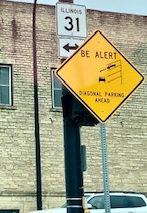
Marie, John and Gus
-
Subscribe
Subscribed
Already have a WordPress.com account? Log in now.
 Travel & Transportation